
VERIFYING CREDENTIALS ...
CompTIA Security+
STATUS: CERTIFIED
Focus: Security Fundamentals • Threats & Vulnerabilities • Risk Management • Network Security • Security Operations
Associate of Applied Science (A.A.S.) Cybersecurity
STATUS: COMPLETED
Focus: Cyber Defense • Networking • Digital Forensics • Ethical Hacking
Google Cybersecurity Professional Certificate
STATUS: COMPLETED
Focus: Security Operations • Incident Response • Linux • SQL • Python • Network Security
LOADING TECHNICAL ARSENAL ...
Hands-on experience with cybersecurity tools, security operations and defensive techniques focused on identifying threats, analyzing risks and strengthening system security.
Security Operations
Hands-on experience monitoring security events, analyzing logs, and investigating suspicious activity through SIEM platforms and security labs.
- > SIEM Monitoring
- > Log Analysis
- > Threat Detection
- > Security Event Investigation
VULNERABILITY MANAGEMENT
Experience identifying security weaknesses through vulnerability scanning, risk analysis and remediation practices.
- > Vulnerability Scanning
- > Risk Assessment
- > Security Hardening
- > Remediation Planning
WINDOWS & ACTIVE DIRECTORY SECURITY
Practical experience analyzing Windows environments, authentication activity and security configurations.
- > Active Directory
- > Windows Event Logs
- > Sysmon Monitoring
- > PowerShell Logging
DIGITAL FORENSICS
Experience examining digital evidence and analyzing artifacts to understand security incidents.
- > File System Analysis
- > Evidence Collection
- > Artifact Investigation
- > Autopsy & FTK Imager
NETWORK SECURITY
Understanding of network security concepts used to identify and analyze potential threats.
- > TCP/IP Analysis
- > DNS & DHCP
- > Network Traffic Analysis
- > Wireshark & Nmap
INCIDENT RESPONSE
Knowledge of the processes used to identify, investigate, contain and respond to security incidents.
- > Alert Investigation
- > Threat Analysis
- > Incident Documentation
- > Security Reporting
Security Investigation Workflow

IDENTIFY
Analyze systems, logs, and security data to identify potential risks and suspicious activity.
INVESTIGATE
Review alerts, events and artifacts to determine the scope and impact of security issues.
ANALYZE
Use security tools and frameworks to understand threats and evaluate vulnerabilities.
IMPROVE
Apply security recommendations, strengthen defenses and improve monitoring capabilities.
PROJECTS
Hands-on cybersecurity projects demonstrating security monitoring, vulnerability management and threat detection skills.
SOC Monitoring Lab
Enterprise-style security monitoring environment.
SIEM LAB
- > Splunk SIEM Deployment
- > Windows Event Log Analysis
- > Sysmon Endpoint Monitoring
- > PowerShell Script Logging
Cloud Security Monitoring
Azure-based SIEM deployment and cloud threat detection.
CLOUD SECURITY
- > Microsoft Sentinel Deployment
- > Azure Log Analytics Workspace
- > Azure Activity Log Monitoring
- > KQL Query Investigation
Microsoft Sentinel Cloud Security Lab
Built a cloud-based SIEM monitoring environment using Microsoft Sentinel, Azure Log Analytics Workspace, Azure Activity Logs and KQL investigation techniques.
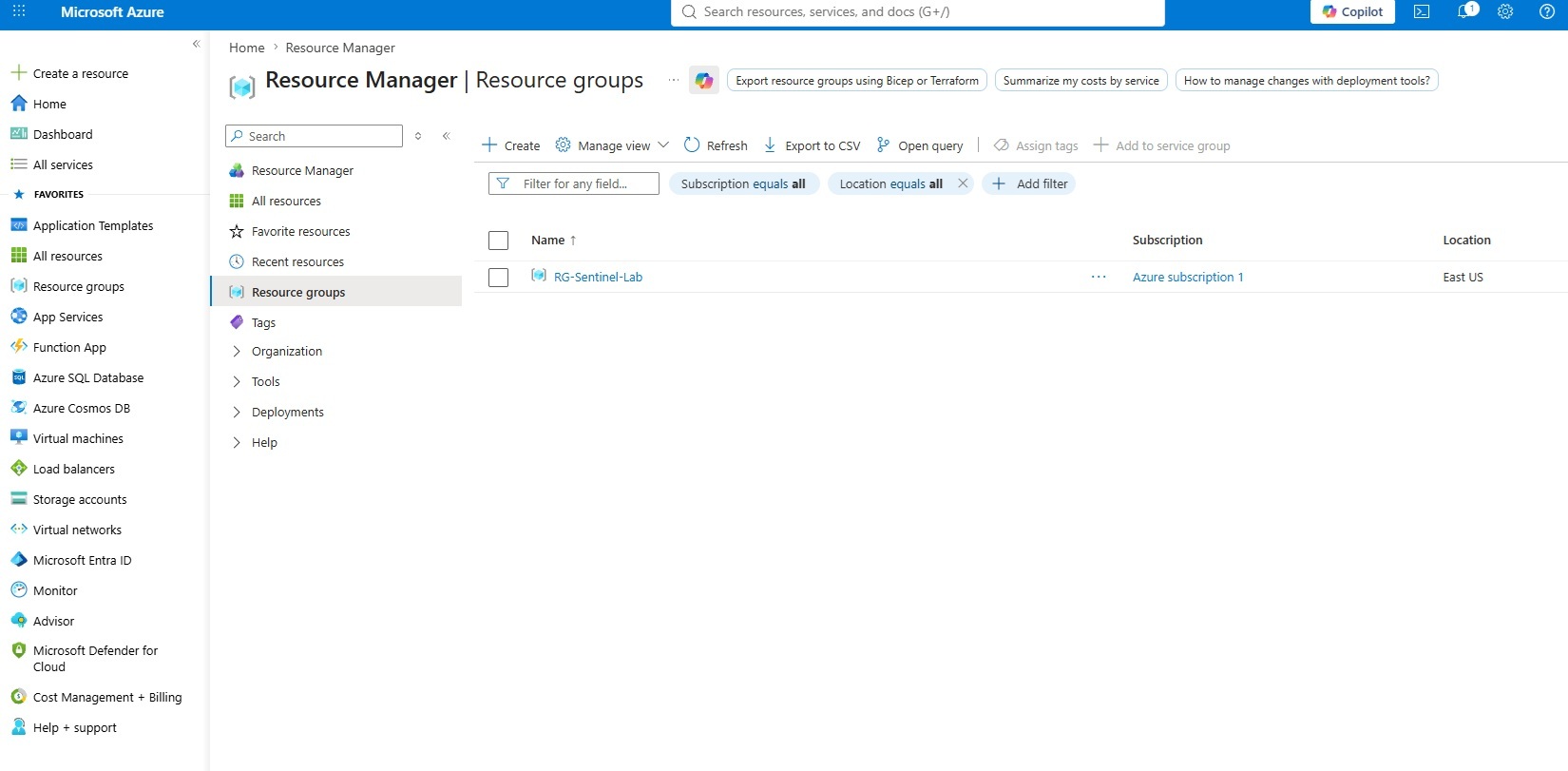
Azure Sentinel Lab Environment
Created a dedicated Azure Resource Group for the Microsoft Sentinel security lab.
Resource Group: RG-Sentinel-Lab
Platform: Microsoft Azure
Region: East US
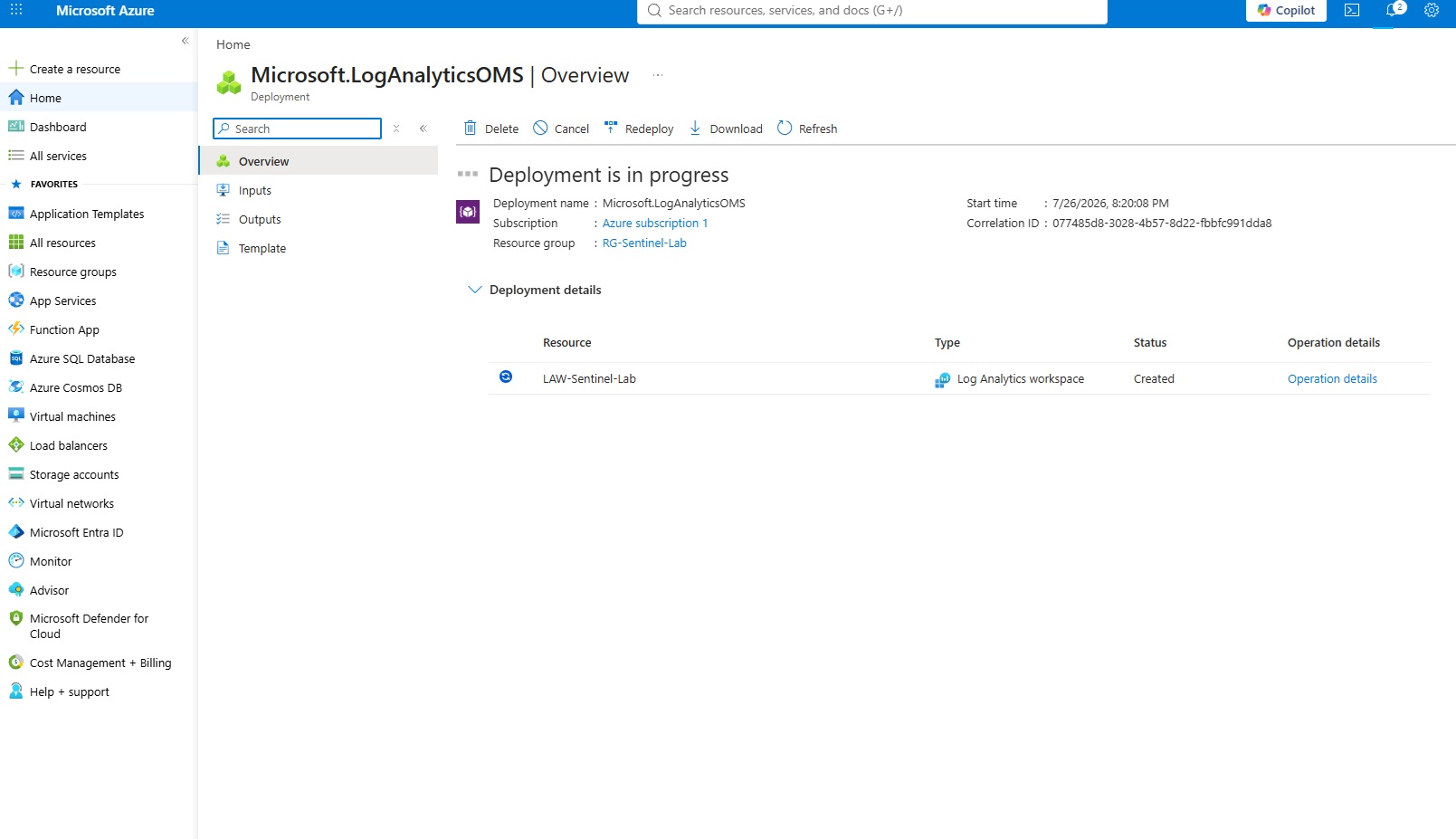
Log Analytics Workspace Deployment
Created the Log Analytics Workspace used by Microsoft Sentinel for security log collection.
Workspace: LAW-Sentinel-Lab
Resource Type: Log Analytics Workspace
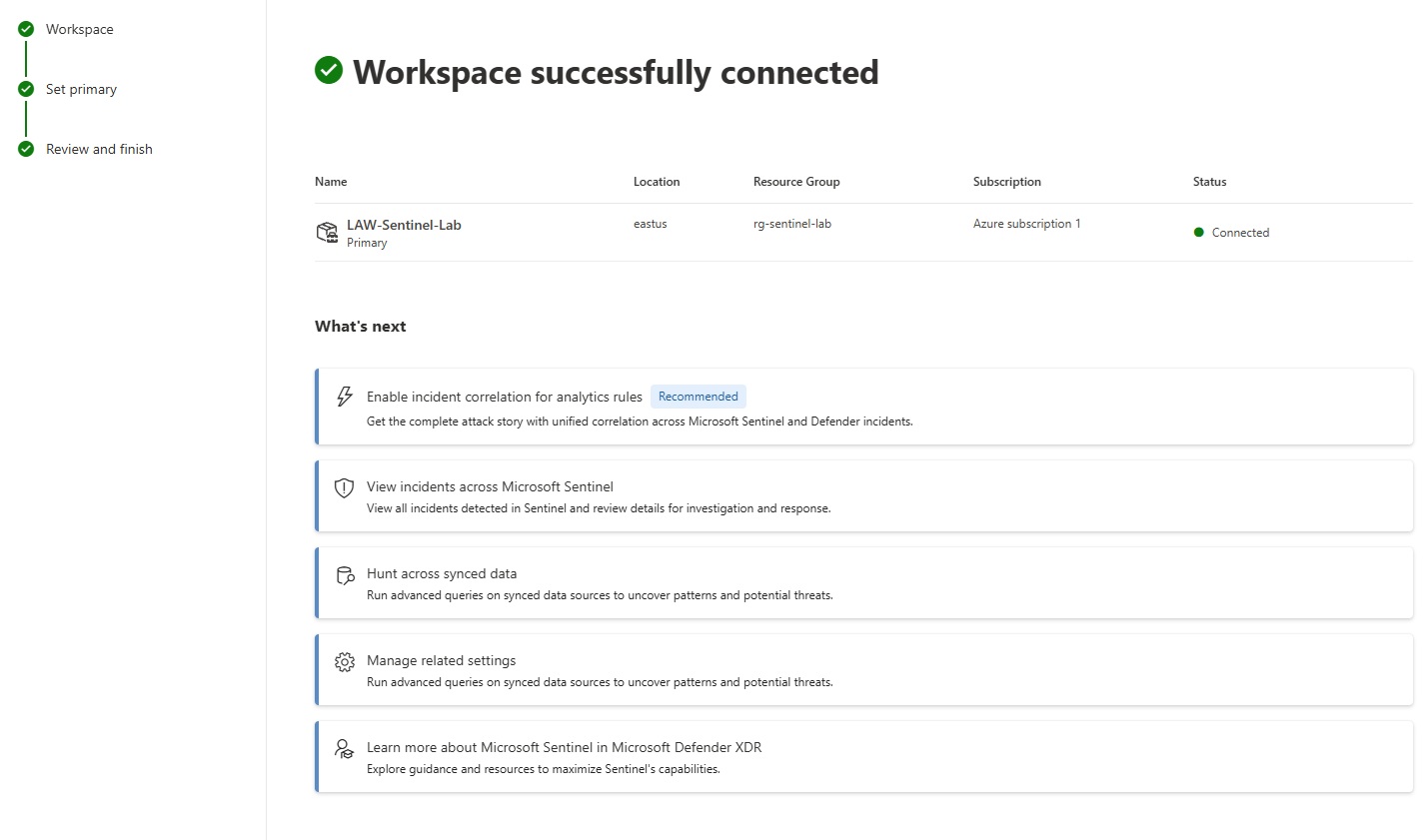
Sentinel Workspace Connection
Successfully connected Microsoft Sentinel with the Log Analytics Workspace.
Connected Workspace: LAW-Sentinel-Lab
SIEM Platform: Microsoft Sentinel
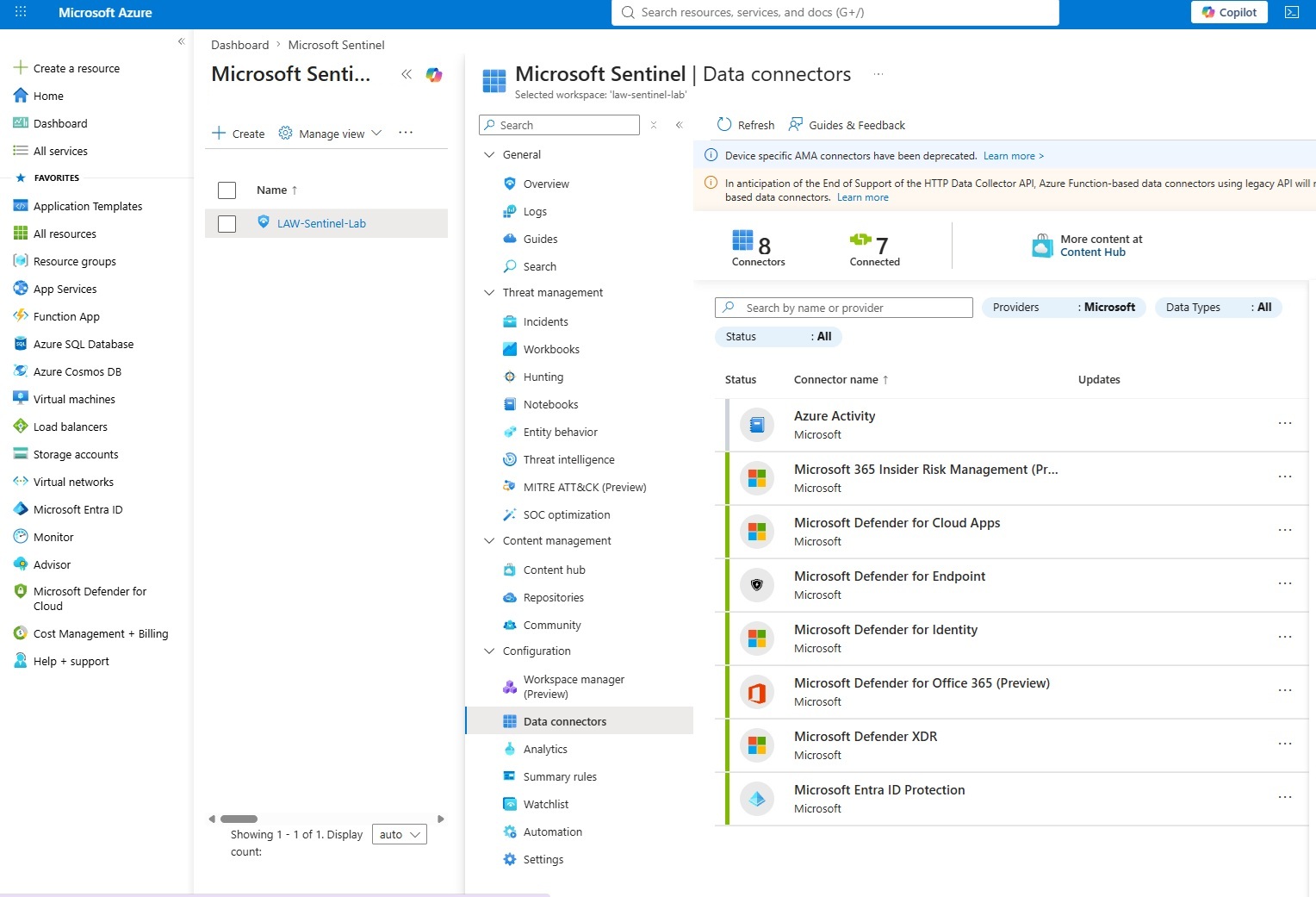
Sentinel Data Connectors
Configured Sentinel data connectors for security telemetry collection.
Status: 8 Connected / 7 Active
Function: Security Event Ingestion
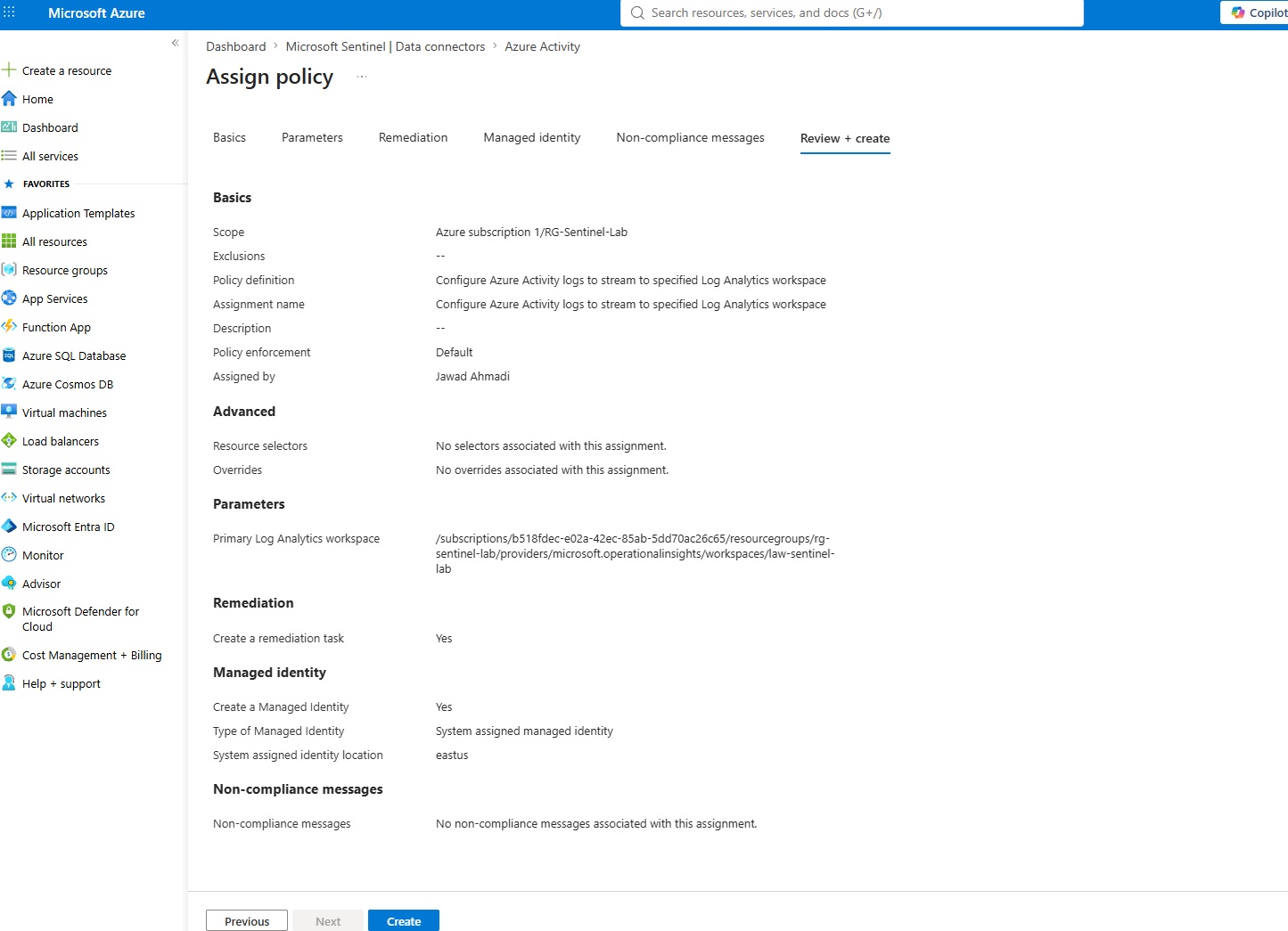
Azure Policy Assignment
Configured Azure Policy to enable Azure Activity Log collection for Sentinel monitoring.
Policy: Configure Azure Activity Logs
Purpose: Cloud Activity Monitoring
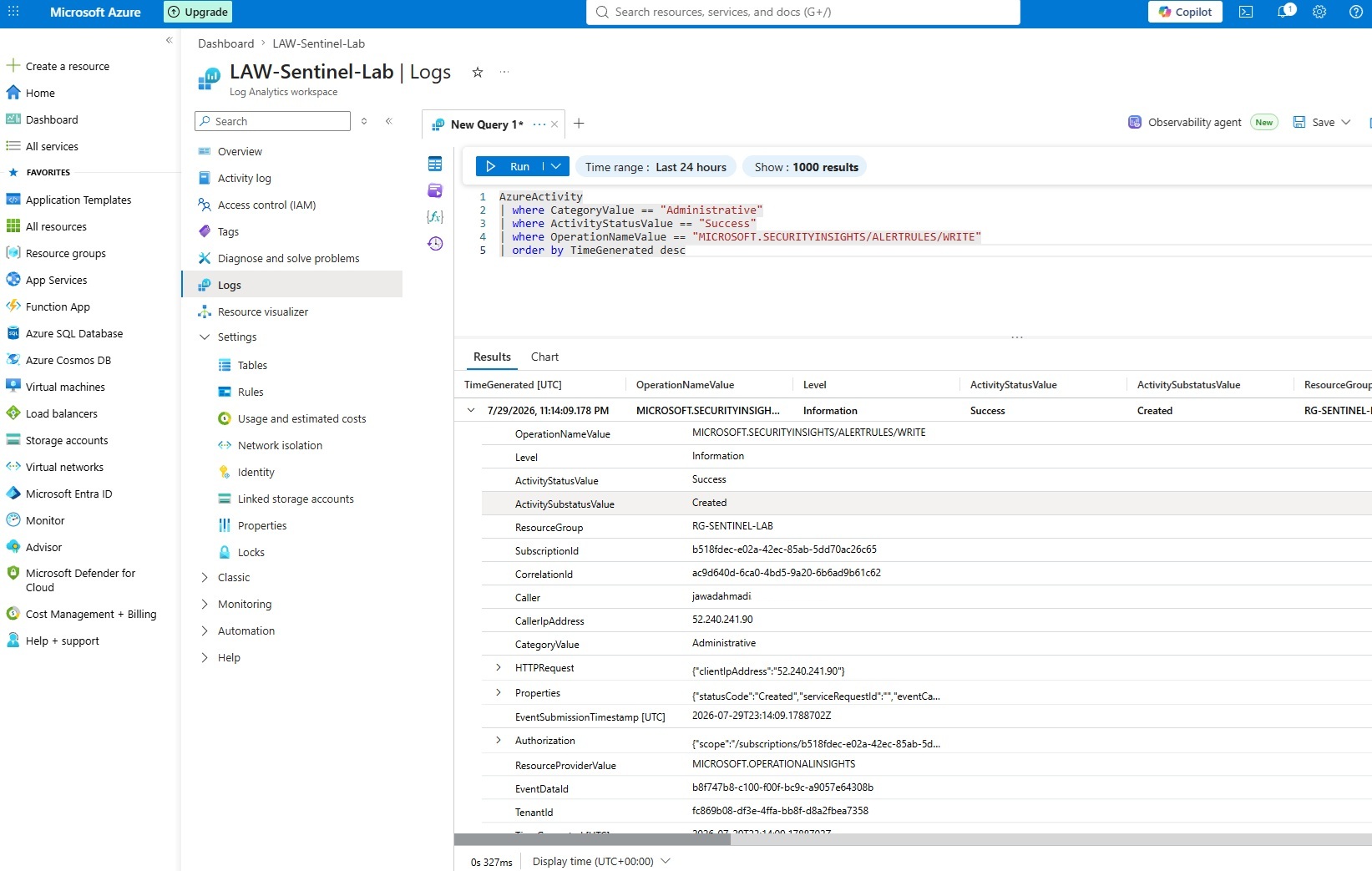
KQL Log Investigation
Analyzed Azure Activity Logs using KQL to investigate administrative events,
caller IP addresses and activity results.
Query Type: Azure Activity Log Analysis
Fields Reviewed: Caller IP, Operation AND Status
Skills: KQL, Log Analysis AND Threat Investigation
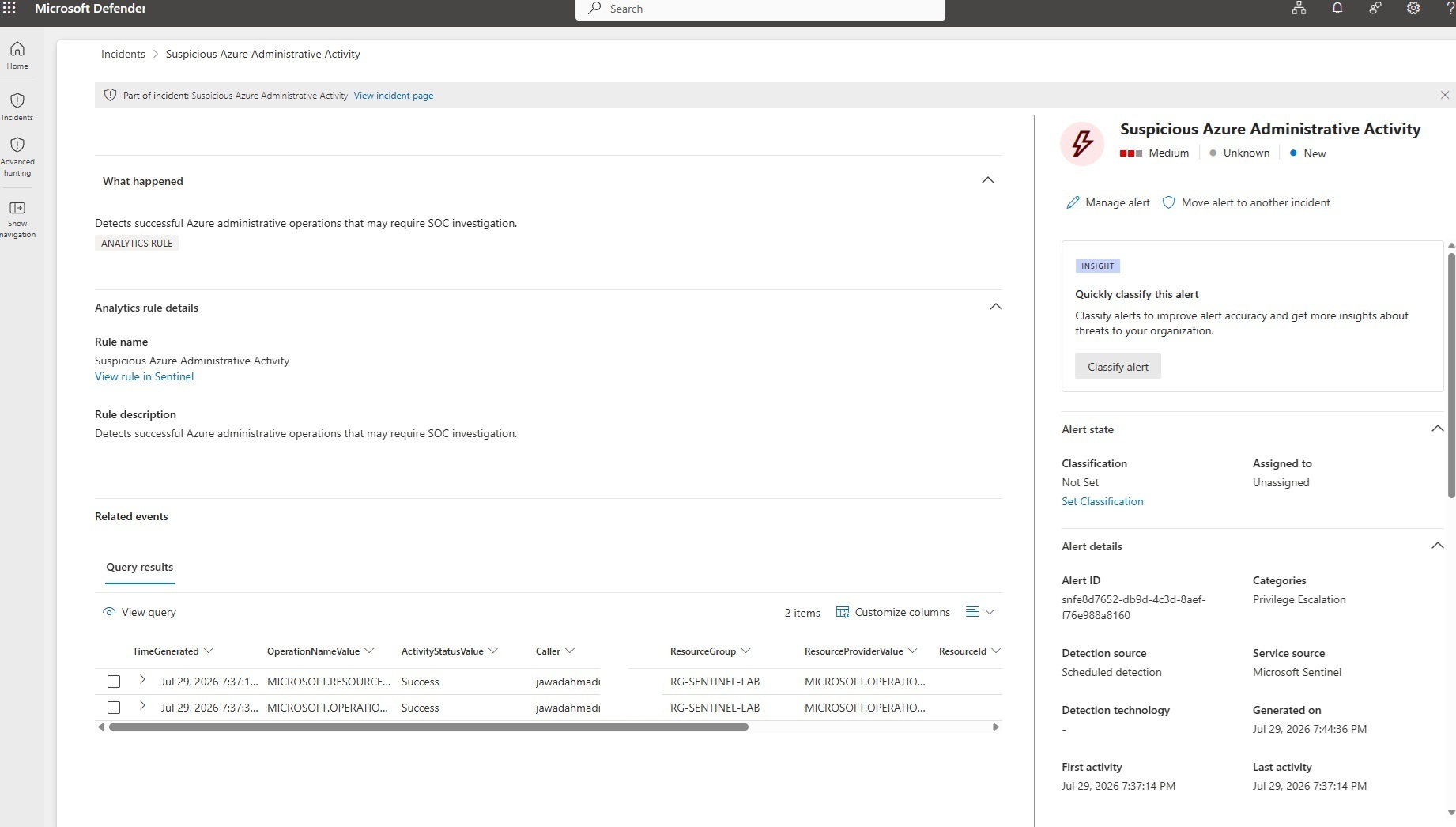
Incident Investigation
Investigated a Microsoft Sentinel incident by reviewing detection details
and security context.
Detection Source: Microsoft Sentinel
Process: Alert Review and Investigation
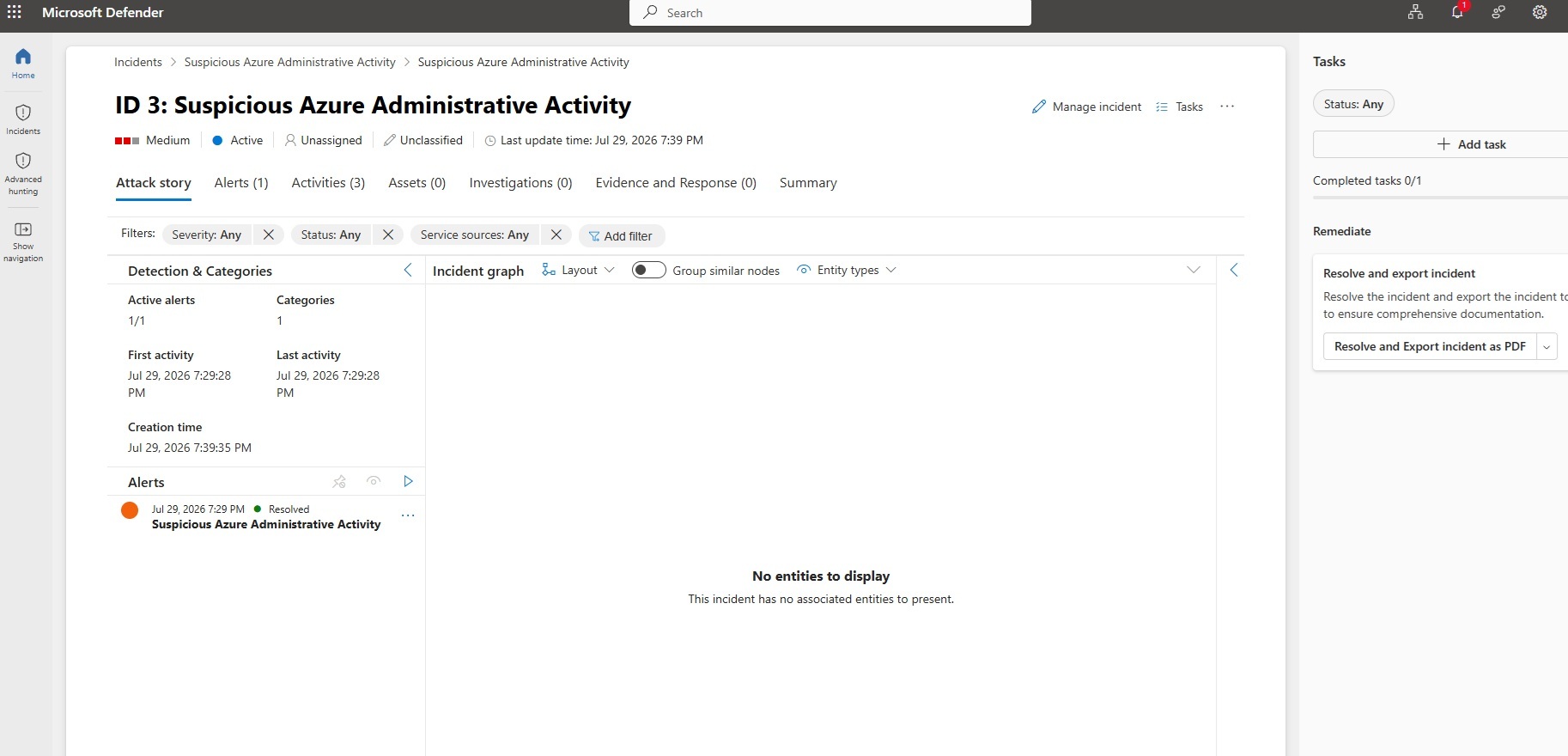
Incident Resolution
Completed the incident response workflow by reviewing findings and resolving
the security alert.
Status: Resolved
Workflow: Detection → Investigation → Response
Splunk SIEM Monitoring
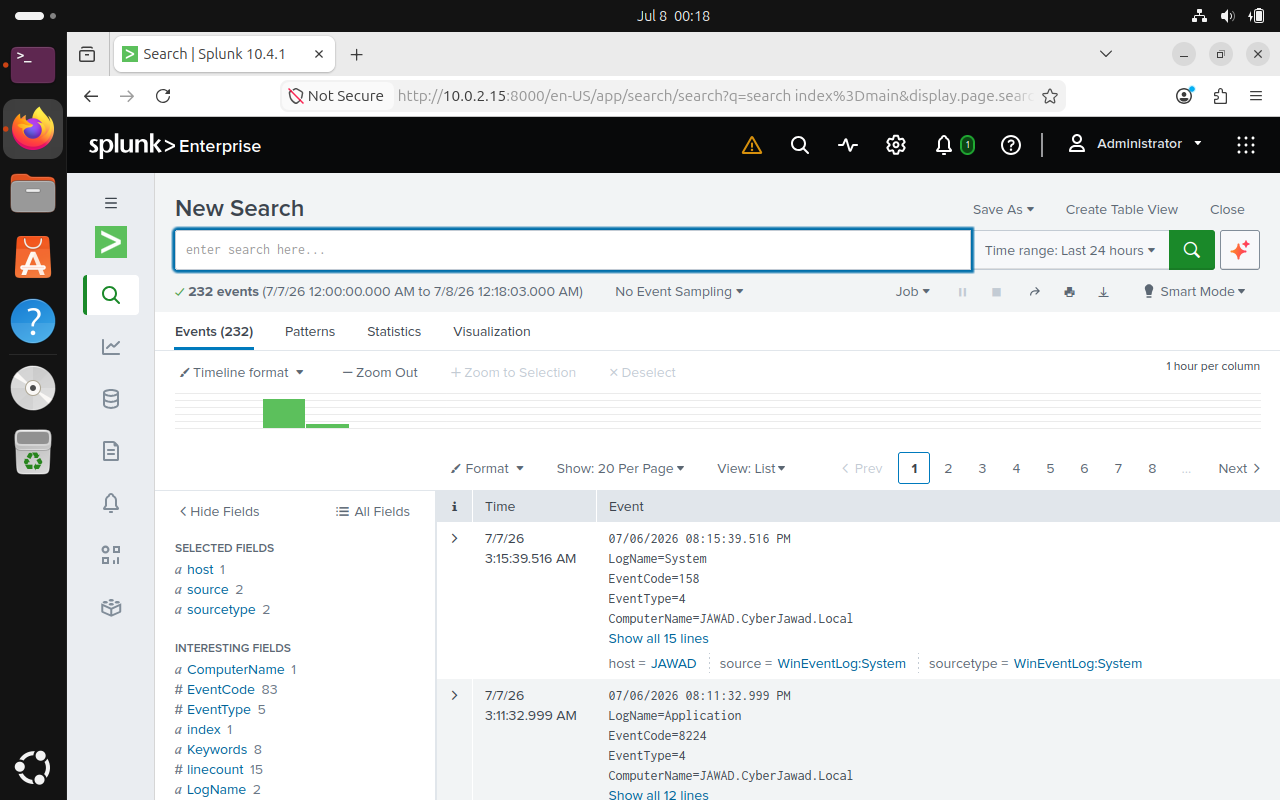
Windows Event Log Collection
Security events collected from endpoint JAWAD.CYBERJAWAD.LOCAL and analyzed in Splunk.
Demonstrates SIEM log ingestion, Windows event monitoring and security visibility.
Computer Name: JAWAD.CYBERJAWAD.LOCAL
Host: JAWAD
User: CYBERJAWAD\jahmadi
Events: EventCode 158, EventCode 8224
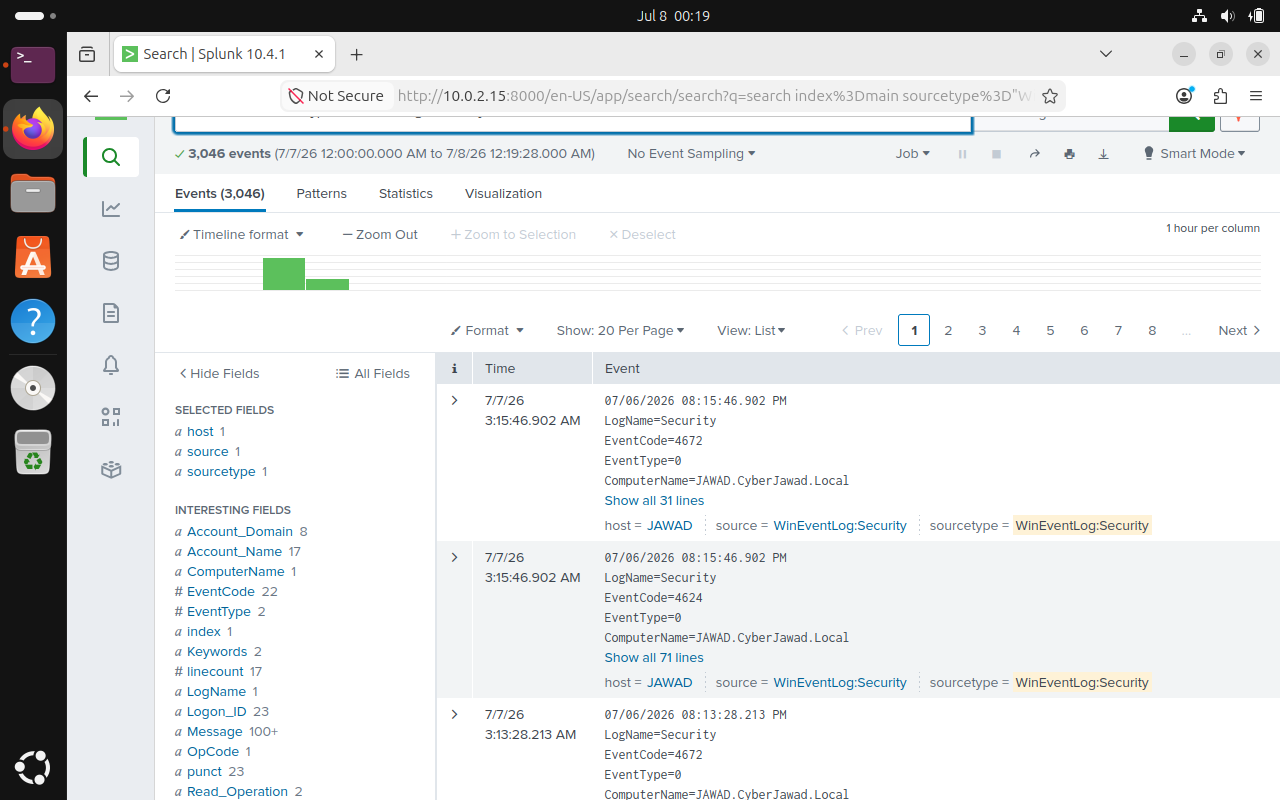
Authentication & Privileged Access Monitoring
Monitoring successful logons and privileged account activity through Windows
Security events. This demonstrates detection of authentication behavior and
privilege usage.
Computer Name: JAWAD.CYBERJAWAD.LOCAL
Host: JAWAD
User: CYBERJAWAD\jahmadi
Events: EventCode 4624, EventCode 4672
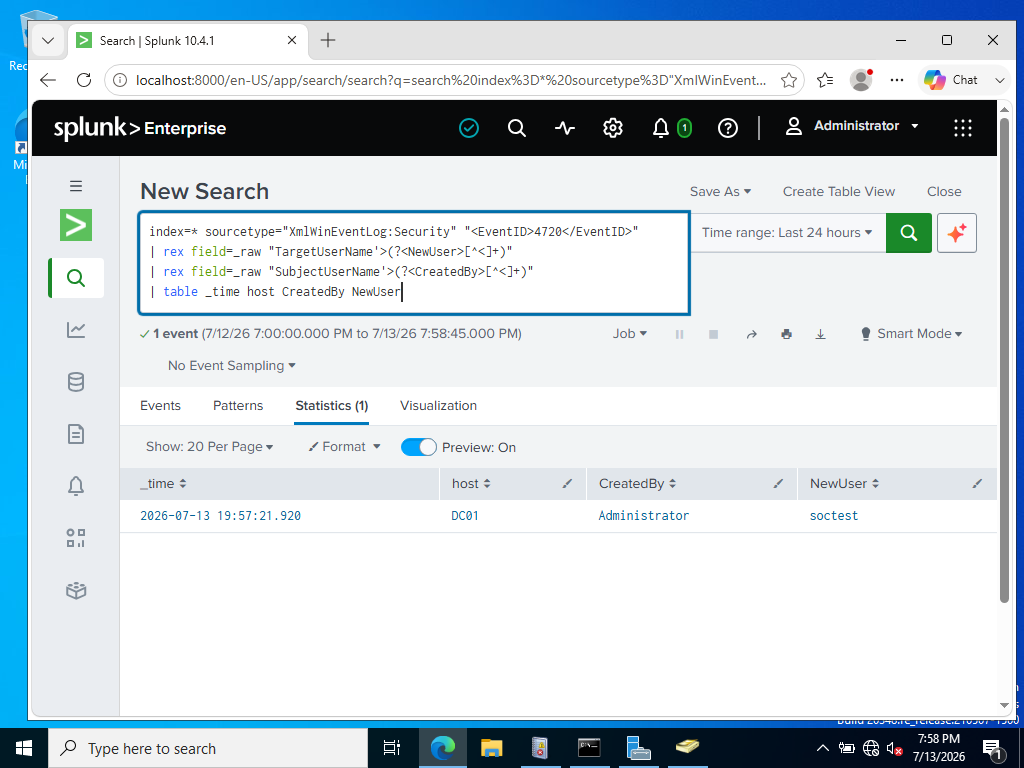
User Account Creation Detection
Detecting and investigating new user account creation activity through Windows
Security logs. Demonstrates monitoring of Active Directory changes and account
management events.
Computer Name: DC01.CYBERJAWAD.LOCAL
Host: DC01
Role: Domain Controller
Activity: User Account Creation Detection
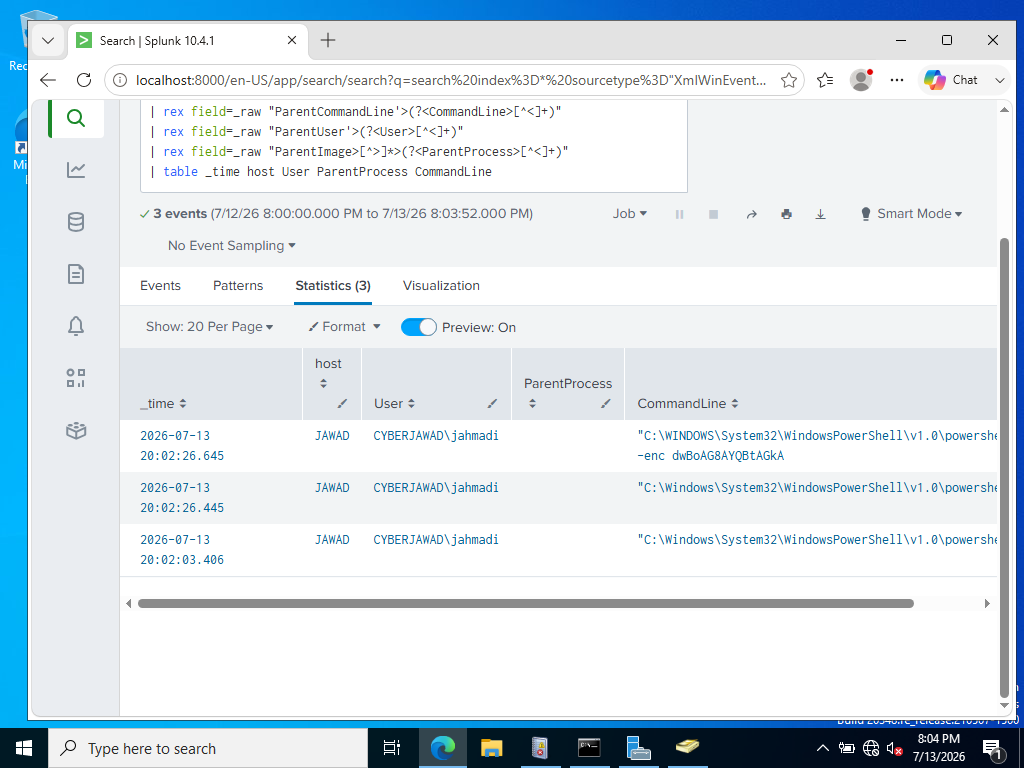
PowerShell Execution Monitoring
Monitoring PowerShell activity to identify script execution, administrative
actions, and potentially suspicious behavior.
Computer Name: JAWAD.CYBERJAWAD.LOCAL
Host: JAWAD
User: CYBERJAWAD\jahmadi
Skills: PowerShell logging, script analysis, threat detection
Active Directory Security
Windows domain administration, identity management, and security hardening using Active Directory, Group Policy and authentication controls.
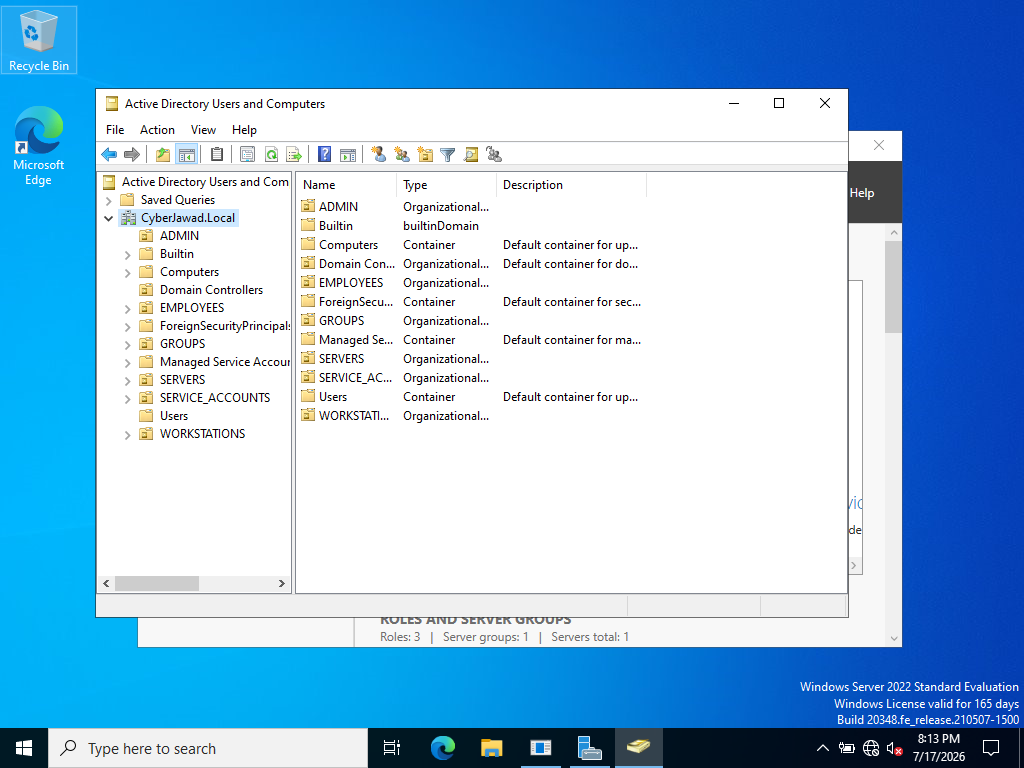
Active Directory Domain Overview
CYBERJAWAD.LOCAL Active Directory environment showing the
domain structure and centralized Windows identity management.
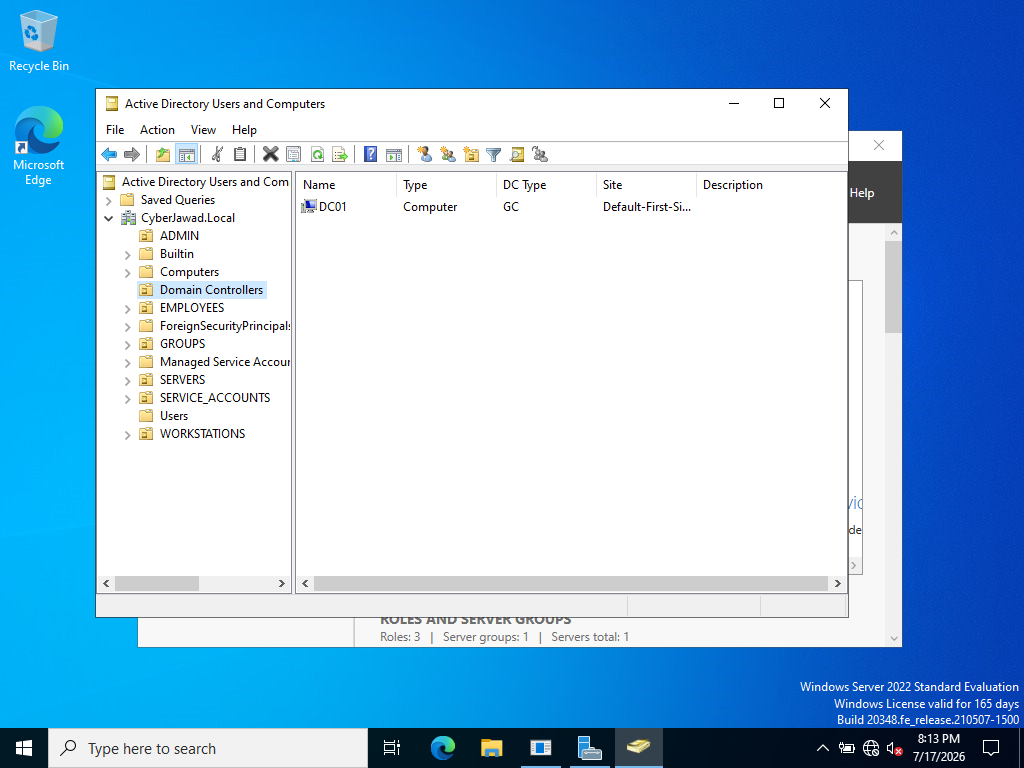
Domain Controller Configuration
Windows Server 2022 configured as the primary Domain Controller
for the CYBERJAWAD.LOCAL environment.
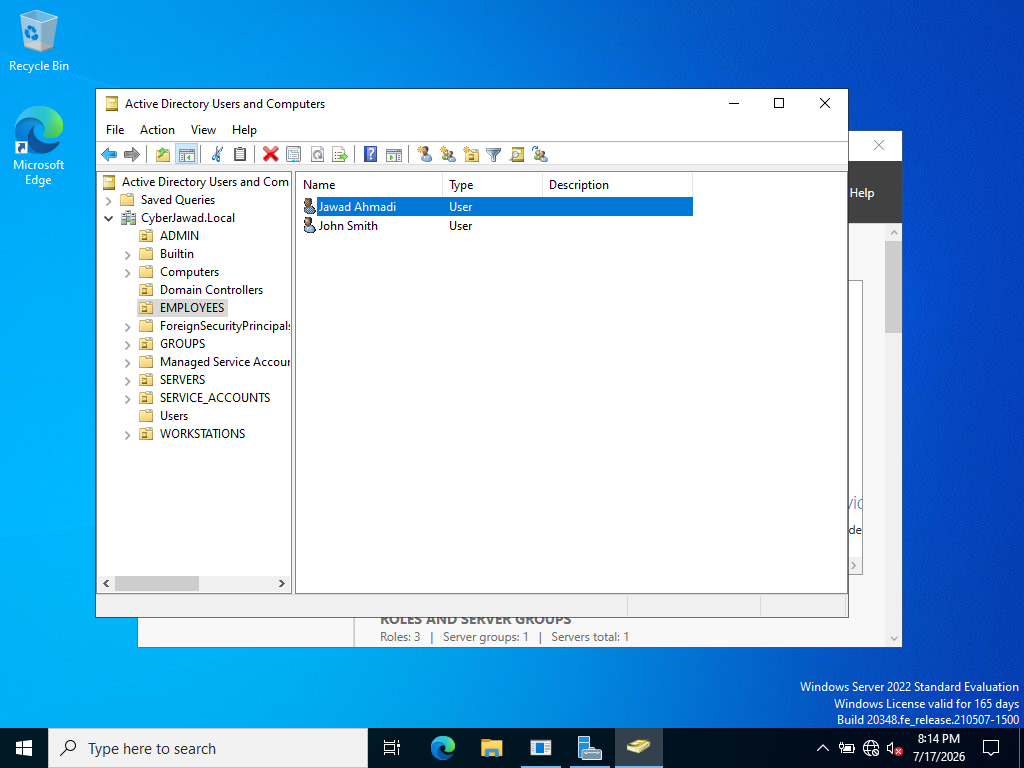
User Account Management
Managing domain user identities through Active Directory Users
and Computers including employee account administration.
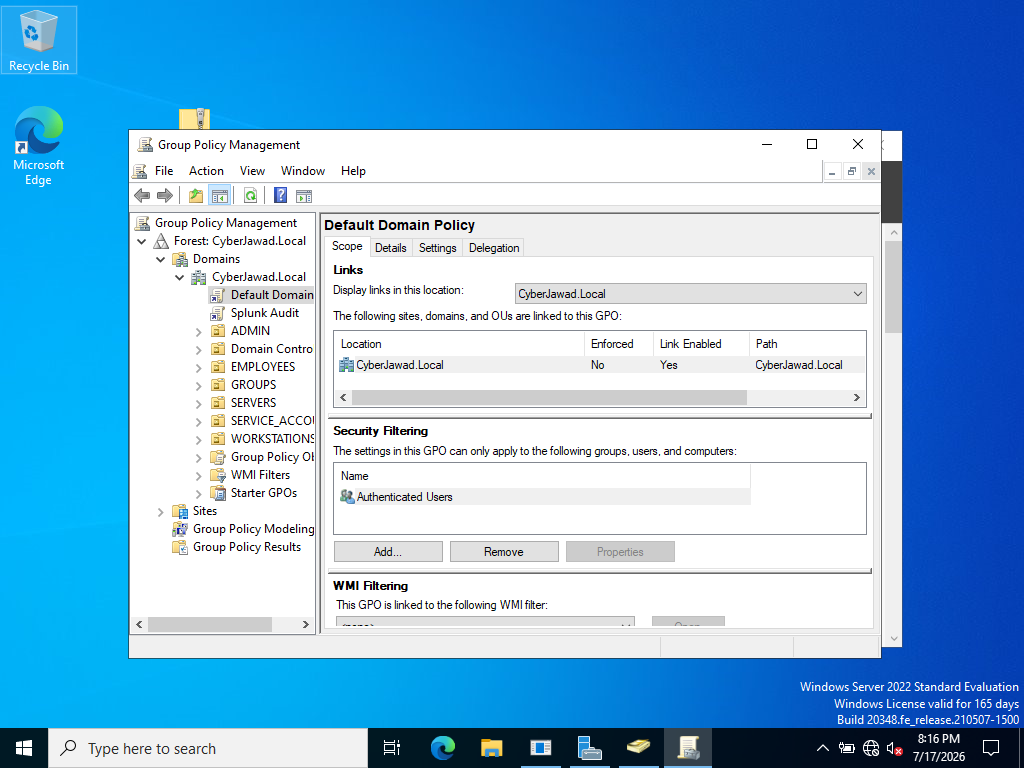
Default Domain Policy Management
Configured centralized security policies through Group Policy
to enforce domain-wide security settings.
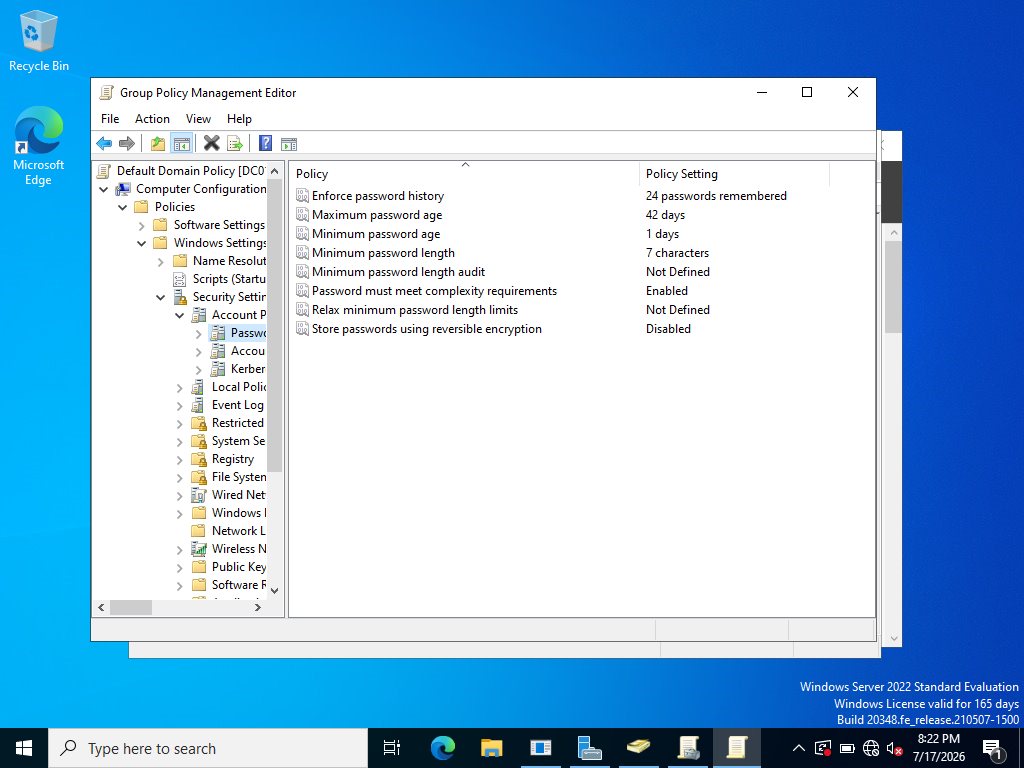
Password Policy Configuration
Implemented password security controls including complexity,
password history and password expiration requirements.
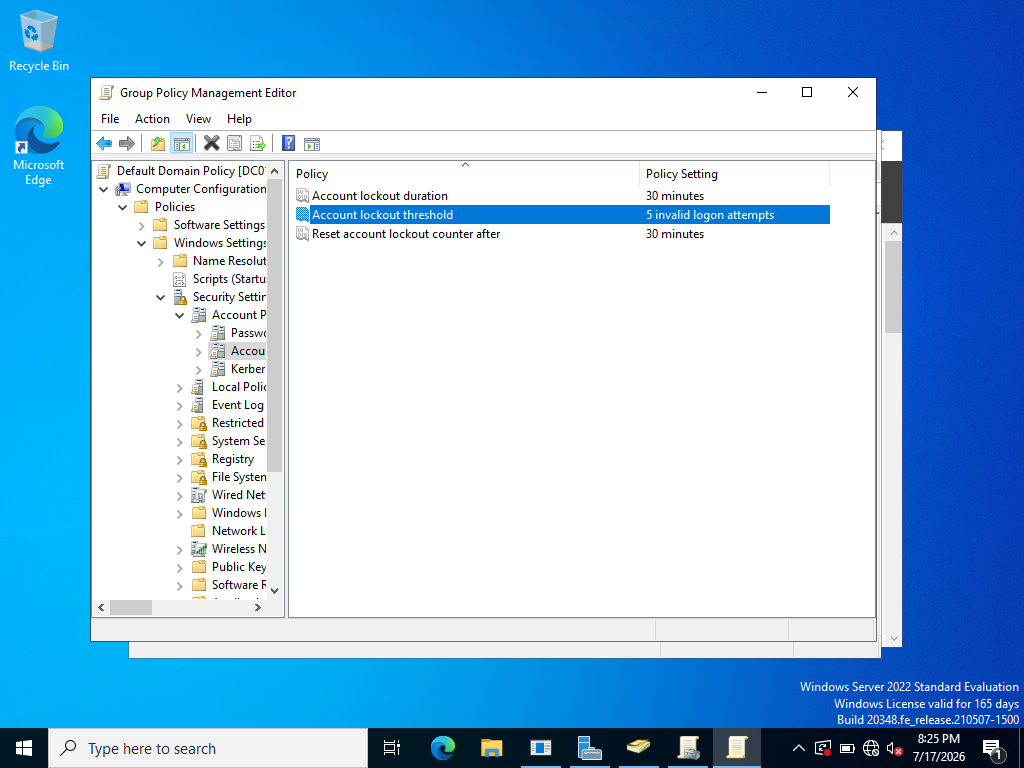
Account Lockout Policy
Configured account lockout protections to reduce brute-force
authentication attacks and unauthorized access attempts.
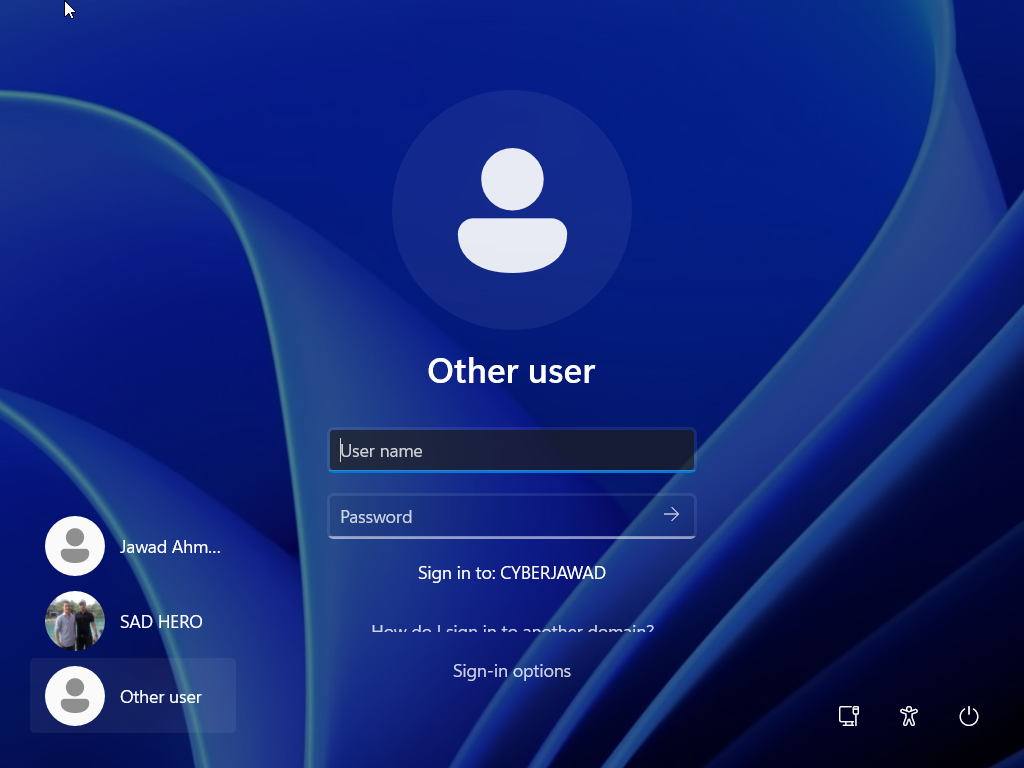
Domain Authentication Login
Windows 11 workstation authenticating through the
CYBERJAWAD.LOCAL Active Directory domain.
Threat Hunting & Detection Analysis
Investigating security telemetry using Splunk SIEM, Windows Event Logs, PowerShell logging and Active Directory monitoring to identify suspicious activity.
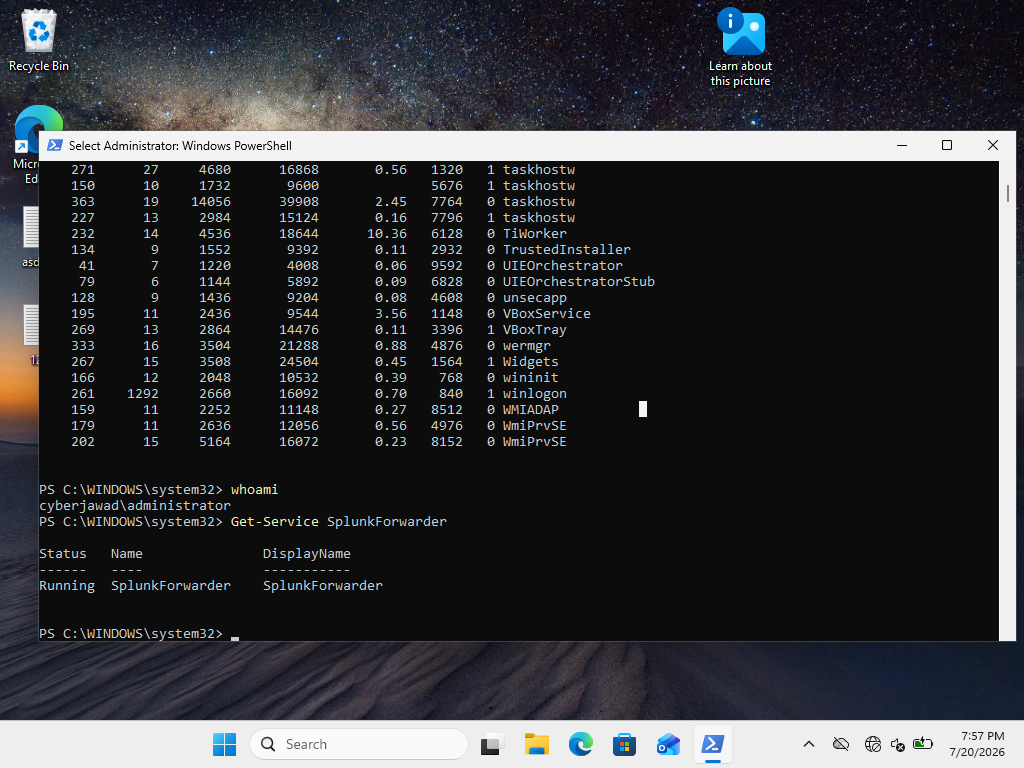
SIEM Data Collection Pipeline
Configured Splunk Universal Forwarder on Windows endpoints to securely
collect security telemetry and forward logs to Splunk SIEM. This provides
centralized visibility for security monitoring and investigation.
Component: Splunk Universal Forwarder
Endpoint: JAWAD.CYBERJAWAD.LOCAL
SIEM: Splunk Enterprise
Purpose: Endpoint telemetry ingestion
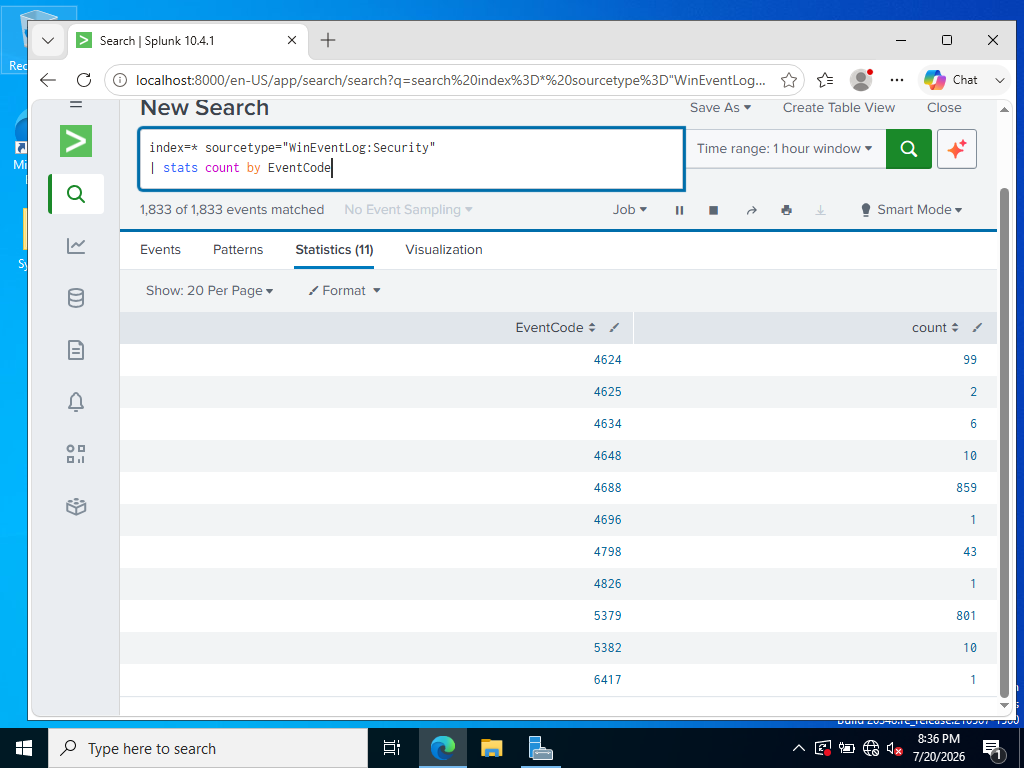
Endpoint Telemetry Monitoring
Collected Windows security events from domain-connected endpoints to establish
visibility into authentication activity, user behavior and system changes.
Data Source: Windows Event Logs
Host: JAWAD
Platform: Windows 11 Endpoint
Analysis: Security Event Investigation
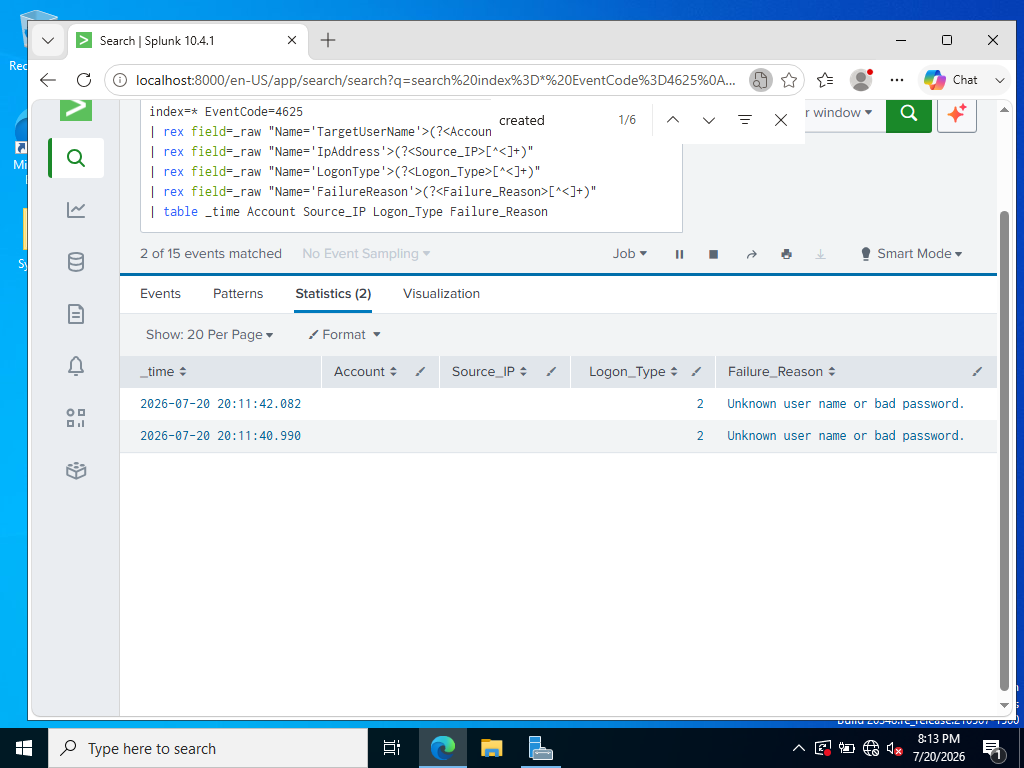
Failed Authentication Detection
Investigated Windows Security Event ID 4625 to identify failed login attempts.
The investigation analyzed account names, source addresses and failure
reasons to identify suspicious authentication activity.
Event ID: 4625 Failed Logon
Source: Windows Security Logs
Detection Type: Authentication Monitoring
SIEM: Splunk
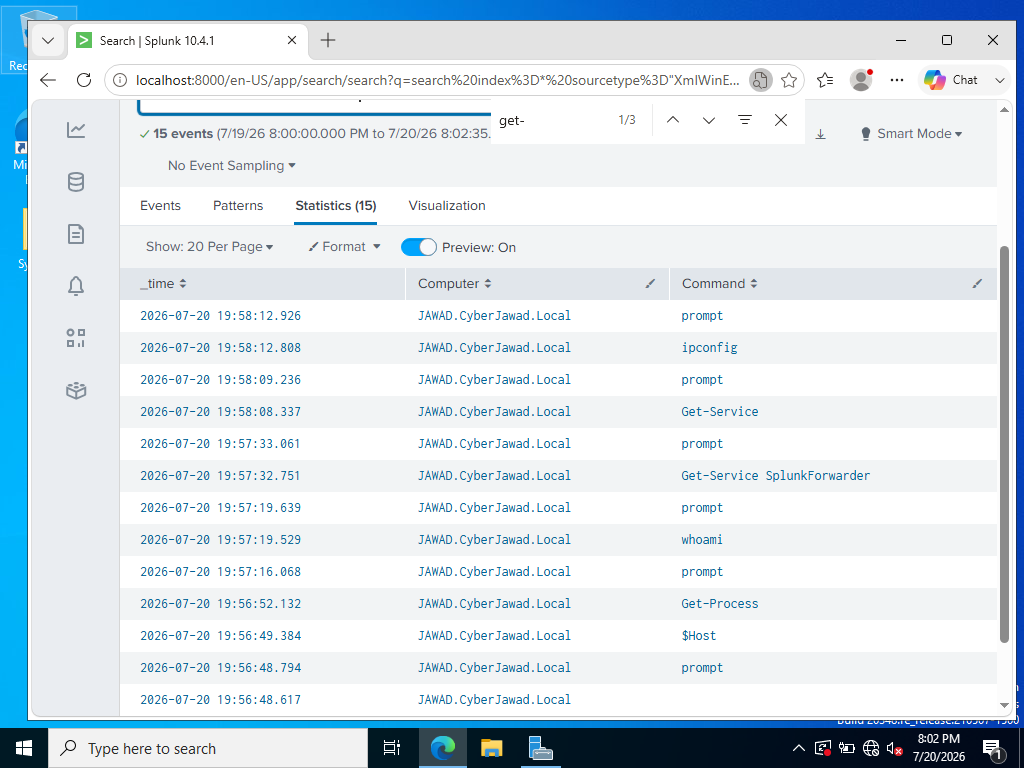
PowerShell Activity Investigation
Analyzed PowerShell execution activity using Windows PowerShell Operational
logs. Script Block Logging provided visibility into executed commands and
administrative actions.
Event ID: 4104 Script Block Logging
Source: PowerShell Operational Logs
Detection: Command Execution Monitoring
Platform: Windows Endpoint
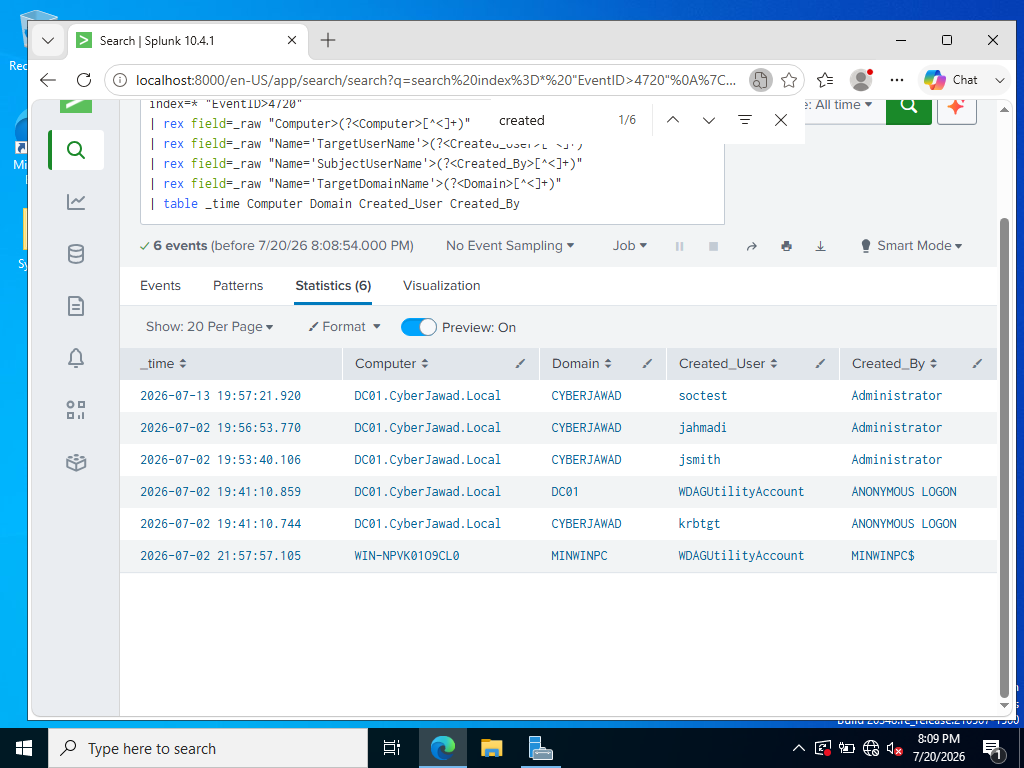
User Account Creation Detection
Monitored Active Directory security events to identify new account creation
activity. Account creation events can indicate legitimate administration or
potential persistence techniques.
Event ID: 4720 User Account Created
Source: Windows Security Logs
System: DC01 Domain Controller
Detection: Identity Monitoring
Threat Hunting Summary
Performed security investigations using Splunk SIEM and Windows telemetry.
Analyzed authentication failures, PowerShell activity and Active Directory
changes to identify suspicious behavior and improve endpoint visibility.
Tenable Vulnerability Assessment
Security assessment and vulnerability analysis using Tenable Nessus to identify, prioritize and recommend remediation for security risks.
Assessment Scope
Target: Windows Server 2022 Domain Controller
Host: DC01
IP Address: 192.168.56.11
Assessment Tool: Tenable Nessus Essentials
Scan Type: Basic Network Scan
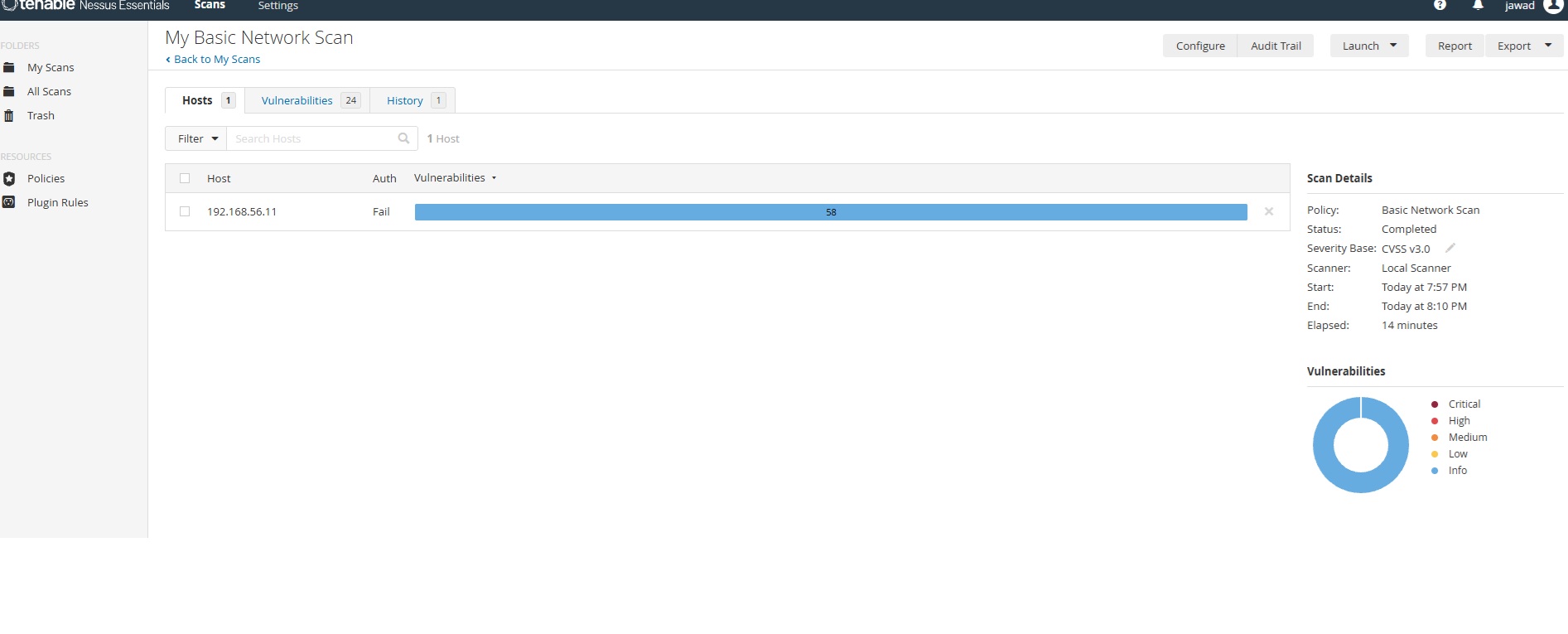
Vulnerability Assessment Environment
Configured a controlled lab environment and performed an automated security scan using Tenable Nessus to identify potential weaknesses.
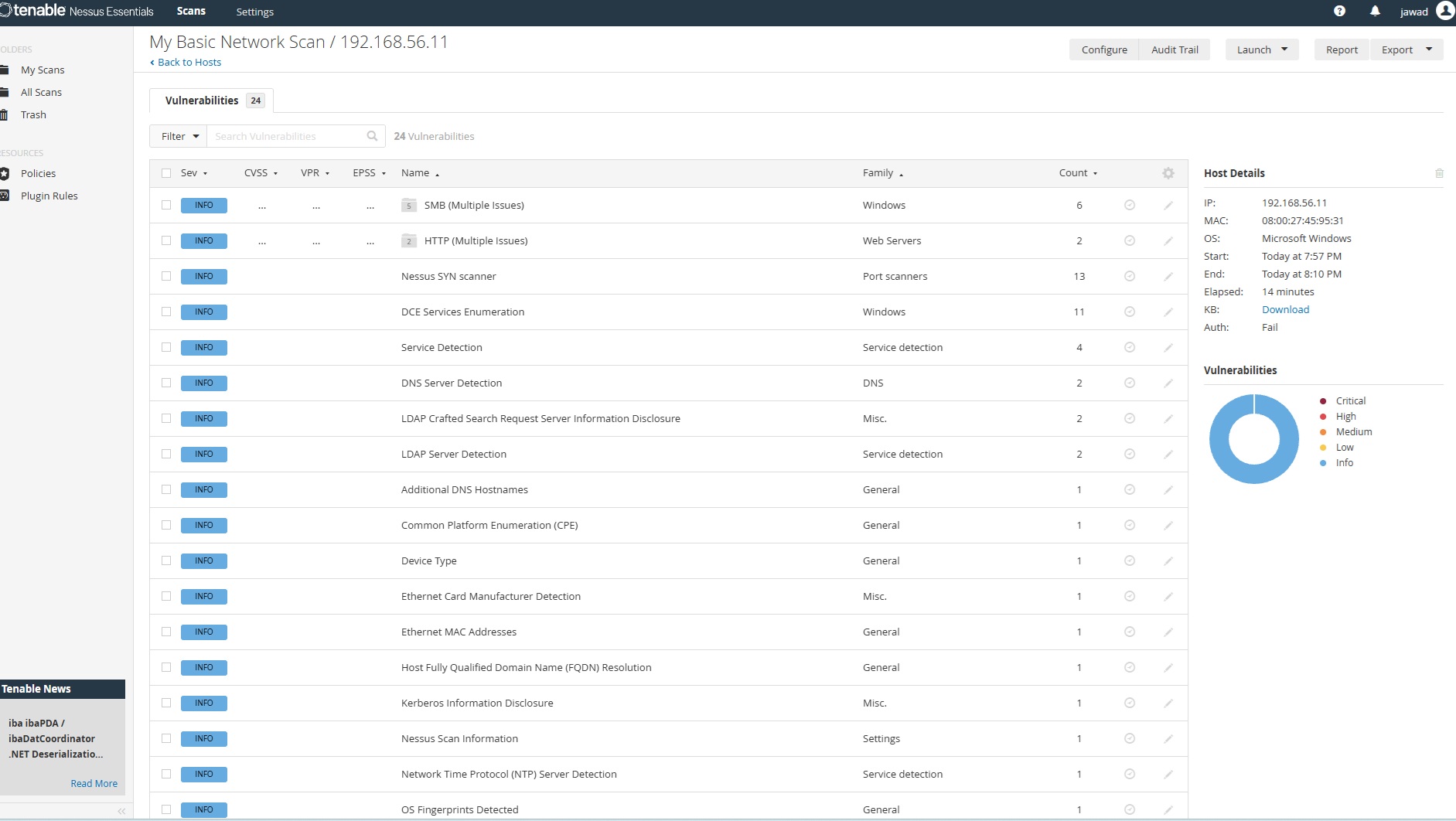
Security Findings Analysis
Reviewed vulnerability results, severity ratings and affected services to evaluate security impact and prioritize risks.
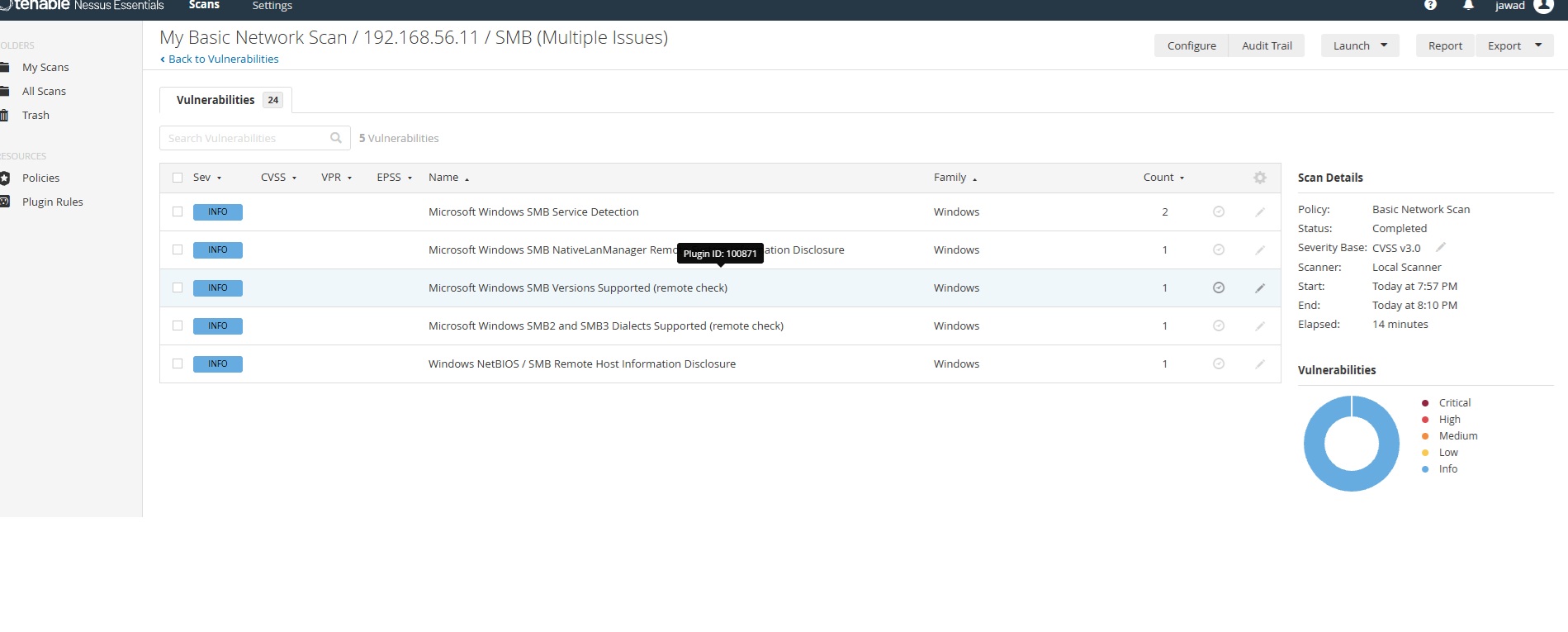
SMB Vulnerability Assessment & Remediation
Analyzed SMB-related security findings and reviewed recommended
remediation steps to improve system security posture.
Assessment Summary
The vulnerability assessment identified security findings affecting the target system. Findings were reviewed based on severity, affected services and potential impact to determine appropriate remediation steps.
Remediation Recommendations
Recommended actions included applying security updates, reviewing exposed services, strengthening system configurations and following vendor-provided mitigation guidance to reduce security risk.
Metasploitable 2 Penetration Testing
Controlled penetration testing assessment performed against an intentionally vulnerable Linux system to identify security weaknesses through reconnaissance, service enumeration, exploitation, and post-exploitation analysis.
Assessment Scope
Target: Metasploitable 2 Linux Virtual Machine
Target IP: 192.168.56.106
Attacker Machine: Kali Linux
Tools Used: Nmap, Netcat
Testing Type: Authorized Penetration Testing Lab
Objective: Identify security weaknesses exploit vulnerable services
and document security impact.
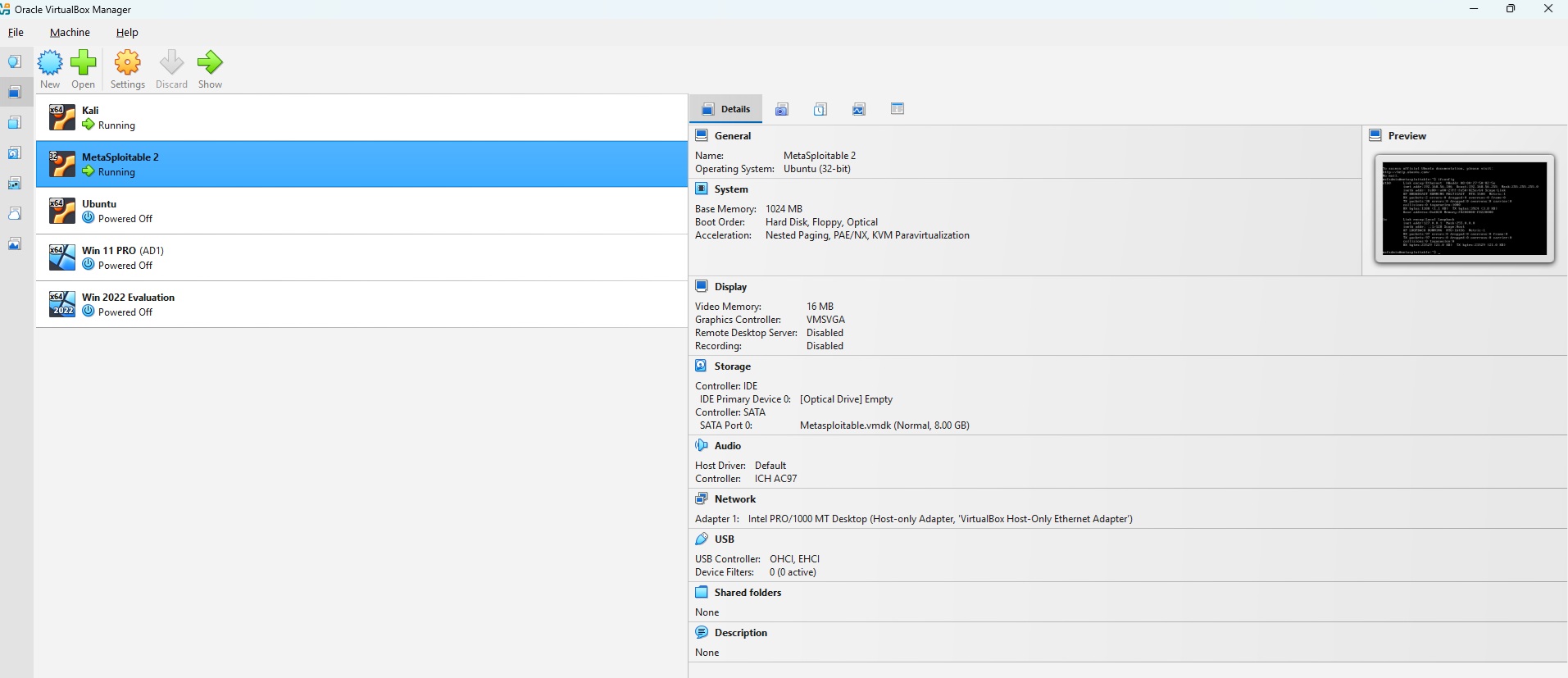
Target Environment Overview
Configured the Metasploitable 2 vulnerable Linux machine as the target system within an isolated penetration testing lab environment.
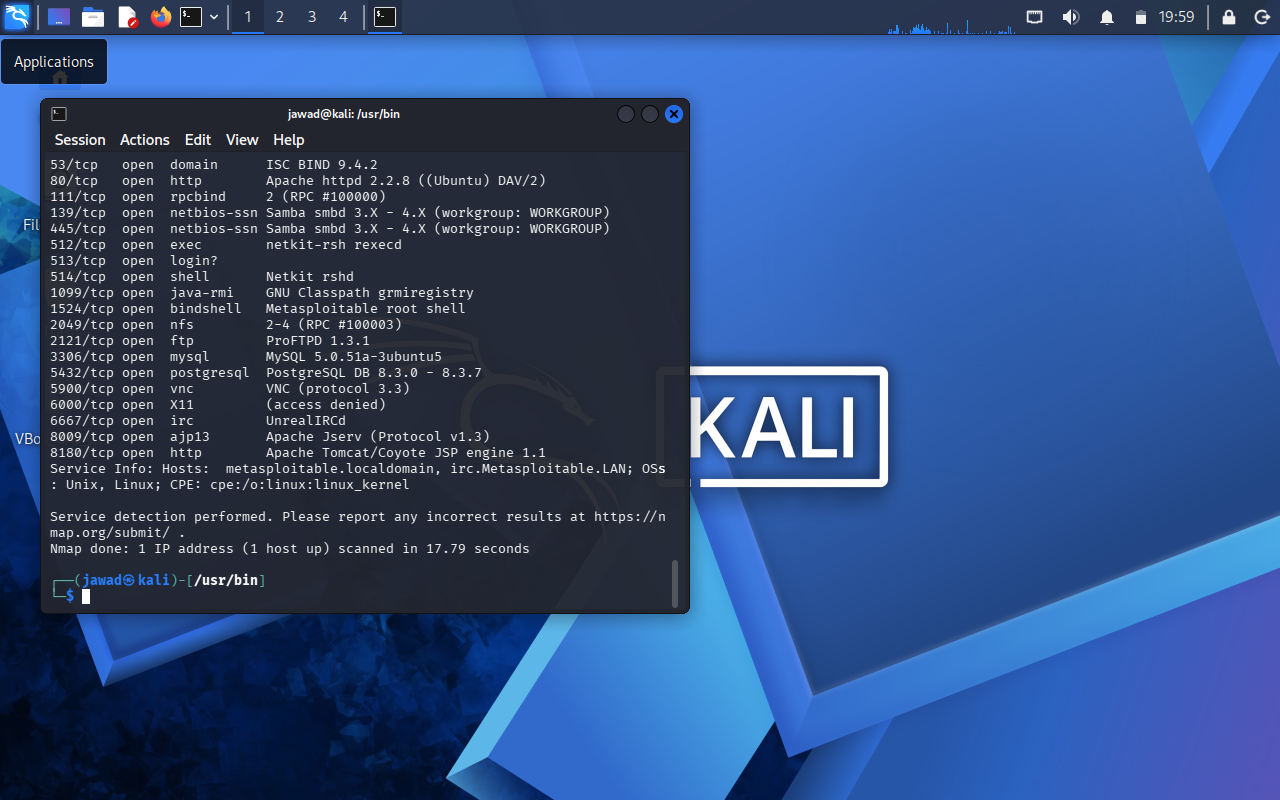
Network Reconnaissance
Performed Nmap service version detection to identify open ports running services and potential attack surfaces on the target system.
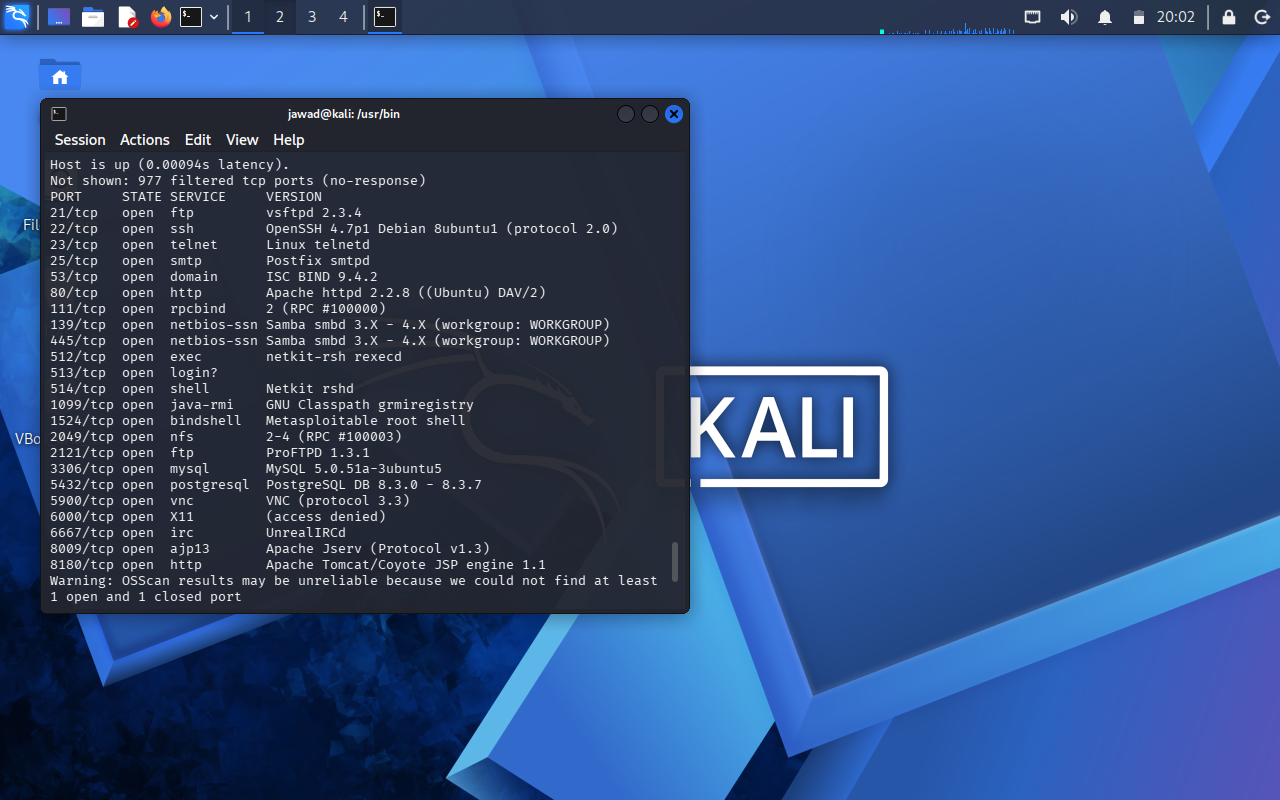
Service Enumeration
Analyzed discovered services and configurations to identify vulnerable applications and possible exploitation opportunities.
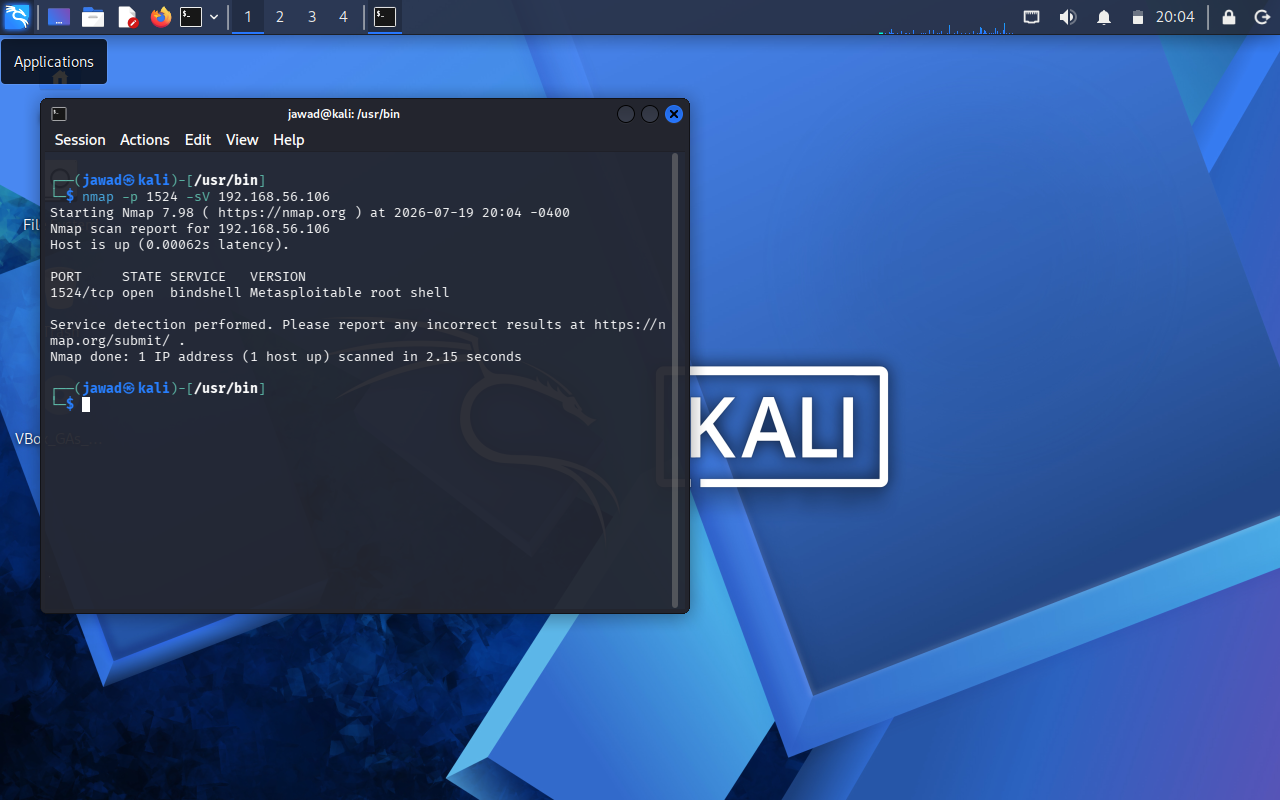
Vulnerability Identification
Identified an exposed bind shell service running on port 1524 that allowed unauthorized command execution on the vulnerable system.
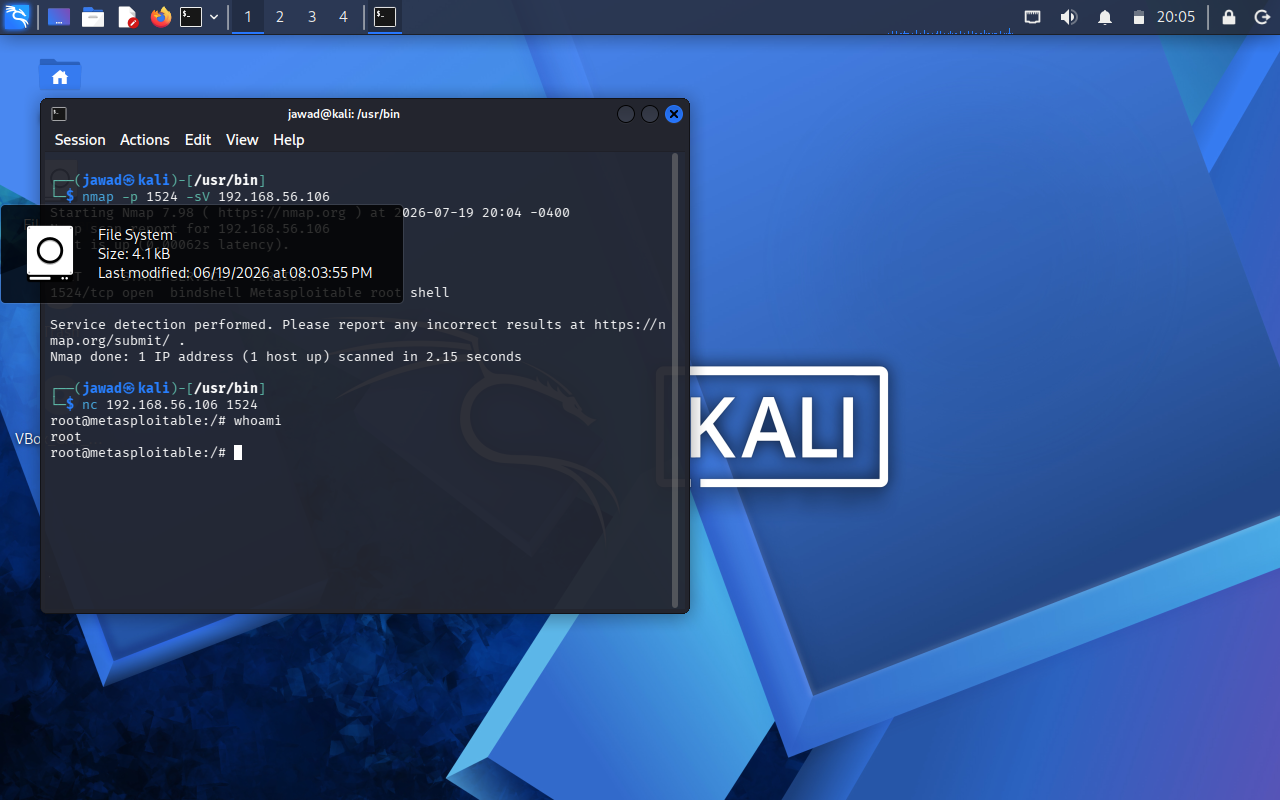
Exploitation Success
Connected to the vulnerable service using Netcat and obtained root-level access within the authorized penetration testing environment.
Assessment Summary
The penetration testing assessment identified vulnerable services within the Metasploitable 2 environment. Through reconnaissance, service enumeration and exploitation testing unauthorized root-level
access was successfully demonstrated in the controlled lab environment.
Security Recommendations
Recommended actions include disabling unnecessary services, applying security patches, removing insecure configurations, restricting exposed ports and implementing proper access controls to reduce attack surface.
Threat Hunting
Detecting suspicious activity through security telemetry analysis and investigation.
THREAT DETECTION
- > Splunk Query Analysis
- > Windows Security Event Investigation
- > Failed Authentication Detection
- > MITRE ATT&CK Mapping
Vulnerability Management
Identifying and prioritizing security risks.
SECURITY ANALYSIS
- > Tenable Vulnerability Scanning
- > Risk Assessment
- > Security Findings Analysis
- > Remediation Recommendations
Penetration Testing
Controlled security testing to identify and analyze system vulnerabilities.
SECURITY TESTING
- > Network Reconnaissance
- > Service Enumeration
- > Exploitation Testing
- > Post-Exploitation Analysis
Active Directory Security
Windows domain security investigation and monitoring.
WINDOWS SECURITY
- > Active Directory Administration
- > Authentication Monitoring
- > User Activity Analysis
- > Security Event Investigation
FAQ
Common questions about my cybersecurity background, skills and services.

LET'S CONNECT
Interested in cybersecurity, security operations or collaboration? Feel free to explore my projects and connect with me.
CONTACT ME10+
Security Labs Built
3+
Security Certifications
100%
Hands-On Learning
40+
Cybersecurity Tools Used
CERTIFICATIONS & TRAINING
Professional certifications and hands-on cybersecurity training that support my security knowledge and technical skills.
CASE STUDIES
Explore hands-on cybersecurity projects, technical walkthroughs, security analysis and vulnerability assessments
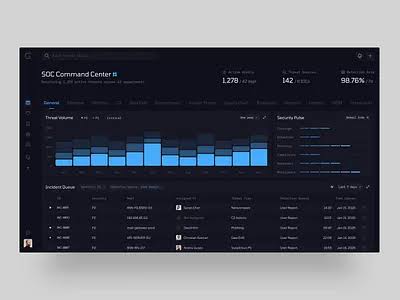
Building a Home SOC Lab
Building an enterprise-style SOC monitoring environment with Splunk, Sysmon, Active Directory and Windows event logging for security detection and analysis
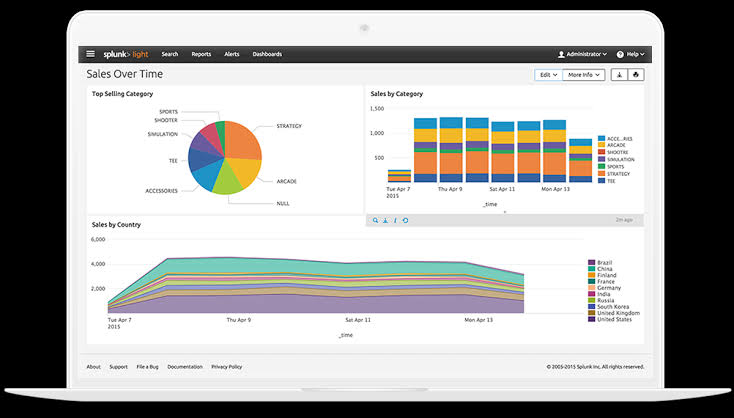
Windows Event Log Analysis with Splunk
Investigating authentication activity, endpoint telemetry and Windows security events to identify suspicious behavior and improve detection capabilities.
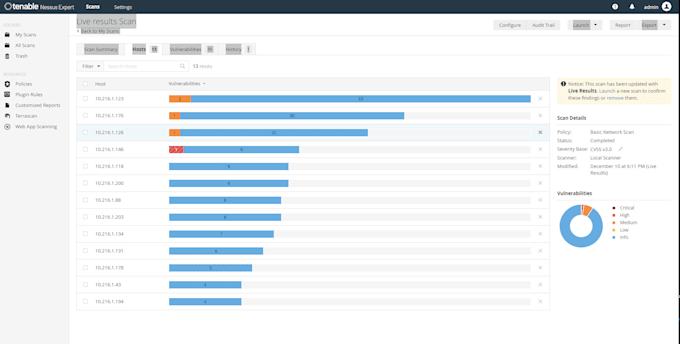
Vulnerability Management with Tenable
Performing vulnerability assessments, analyzing CVEs, prioritizing risk and documenting remediation strategies.
CONTACT ME
Interested in cybersecurity collaboration, discussing projects, or connecting about security opportunities? Feel free to reach out.